Notas de energías renovables

Aquí puede comentar todo aquello que no sea de política, de economía, de temas sociales del día a día
Fermat
Mensajes: 2139
Registrado: Mié Mar 02, 2022 5:42 am

Re: Notas de energías renovables

Mensaje sin leer por Fermat »

El calor residual de centros de datos calienta el nuevo distrito de Berlín-Spandau
Katharina Wolf, 04-Abr-2025

Imagen
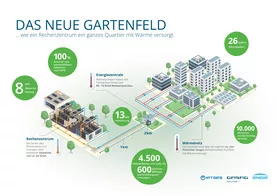
Ilustración de un plan de energía verde para un área urbana que utiliza centros de datos con edificios y rutas de flujo de energía. - © NTT DATA

Entre 20 y 30 grados son suficientes para que funcione una red de calefacción local, explican los operadores. Un nuevo estudio también destaca el papel del almacenamiento de calor en la capital.

Un concepto de calefacción innovador toma forma: el nuevo complejo residencial “Das Neue Gartenfeld” en Berlín-Spandau apuesta por una calefacción sin CO₂. Un componente clave es el calor residual de dos centros de datos existentes en las cercanías: los sistemas de NTT Data proporcionan hasta ocho megavatios de calefacción.

Calor para más de 10.000 personas
Un tubo de dos kilómetros de longitud conectará los centros de datos con el centro energético del distrito. En 31 hectáreas se construirán 4.500 viviendas, 200 locales comerciales, así como guarderías y escuelas para más de 10.000 personas. El calor residual de los centros alcanza temperaturas de entre 20 y 30 grados Celsius, suficiente para que las bombas de calor generen la temperatura de flujo necesaria de 65 grados Celsius para la red de calefacción urbana, según NTT Data. Para suplir los picos de demanda en invierno, se instalará una caldera de calefacción con una capacidad de 3,6 MW. Un depósito de agua caliente de 300 metros cúbicos sirve como reserva.

Un nuevo informe destaca la importancia del almacenamiento
El calor residual podría contribuir decisivamente al suministro de calor neutro desde el punto de vista climático, confirma un informe del Instituto Reiner Lemoine (RLI) y otros. Por encargo de la administración del Senado de Berlín, se investigó la importancia del almacenamiento de calor para la transición térmica. De este modo, el almacenamiento a largo plazo podría incrementar la proporción de calor renovable y calor residual en la red de calefacción urbana de Berlín en aproximadamente un cinco por ciento. Esto requeriría 700 megavatios de producción de calor procedente de energías renovables y calor residual, así como una capacidad de almacenamiento de hasta 440 gigavatios hora.

Los sistemas de almacenamiento a corto plazo, como los sistemas de almacenamiento de calor en tanques, también podrían estabilizar la red eléctrica amortiguando los picos de carga y convirtiendo la electricidad en calor. El estudio recomienda duplicar o triplicar la capacidad existente de almacenamiento a corto plazo, hasta 6,6 GWh.

El almacenamiento en acuíferos subterráneos es especialmente adecuado
Según el informe, los sistemas de almacenamiento de calor en acuíferos, en capas subterráneas cerradas, son especialmente adecuados para Berlín, porque en las ciudades densamente urbanizadas el espacio para el almacenamiento sobre el terreno es limitado. En redes distritales descentralizadas, estos sistemas de almacenamiento podrían absorber hasta el 33 por ciento del calor anual y utilizar casi todo el calor residual de los centros de datos o de los sistemas de alcantarillado.

“La transición térmica solo puede tener éxito con la energía geotérmica”
Pero hasta entonces todavía queda mucho por hacer: primero hay que comprobar si el subsuelo de Berlín es geológicamente adecuado para estas instalaciones de almacenamiento, reconoce el RLI. También siguen existiendo obstáculos de carácter jurídico, como los procedimientos de aprobación. En Spandau la situación está más avanzada: los primeros residentes se mudarán en 2025, inicialmente con una solución provisional. El suministro de calor residual comienza un año después.

https://www.erneuerbareenergien.de/waer ... in-spandau
Fermat
Mensajes: 2139
Registrado: Mié Mar 02, 2022 5:42 am

Re: Notas de energías renovables

Mensaje sin leer por Fermat »

Prácticamente una nota de prensa, pero es una tecnología interesante a seguir.

ICODOS starts up the world’s first plant of its kind in Mannheim
Emma Schmitt, 3 April 2025

Imagen
ICODOS starts up the world’s first plant of its kind in Mannheim

This pioneering project demonstrates the enormous potential of sewage treatment plants as an energy source – there are around 9,000 in Germany alone, and up to 75,000 across Europe

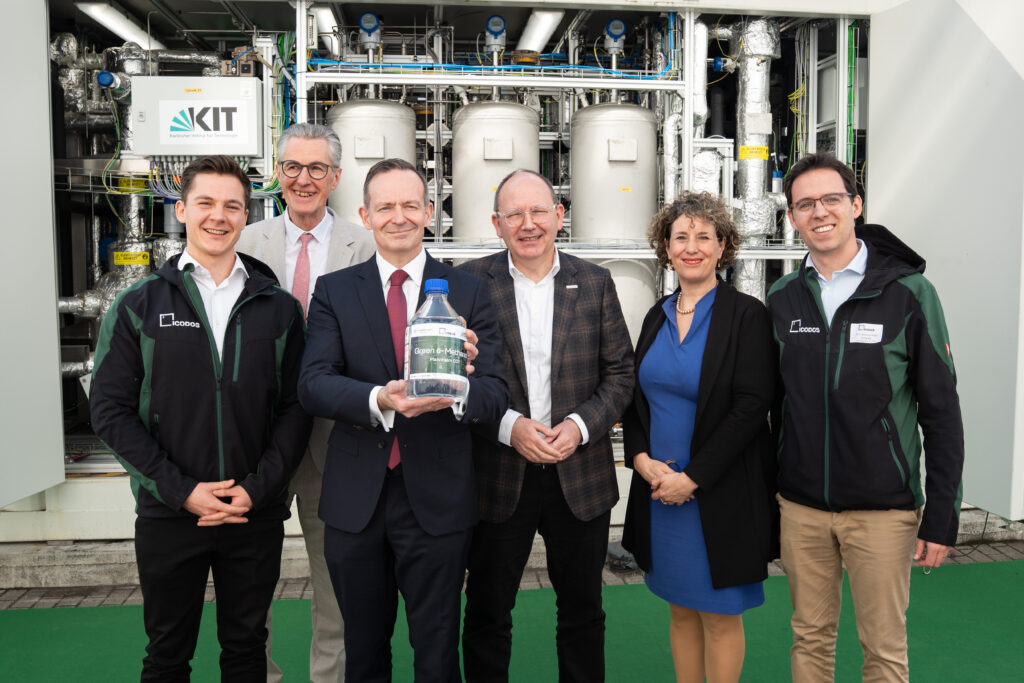
With a groundbreaking innovation, the start-up ICODOS, in collaboration with the Karlsruhe Institute of Technology (KIT) and the Mannheim municipal sewage treatment plant (EBS), is setting new standards in sustainable fuel production. In a plant that is the first of its kind in the world, renewable electricity and wastewater are being used to produce sustainable ship fuel for the first time. This pioneering project demonstrates the enormous potential of sewage treatment plants as an energy source – there are around 9,000 in Germany alone, and up to 75,000 across Europe.

A flagship project for the maritime energy transition
ICODOS GmbH is a climate tech start-up based in Mannheim. Originating from a research project at the Karlsruhe Institute of Technology (KIT), the company specialises in producing sustainable fuels and chemicals from renewable sources such as biogas and CO₂ in combination with renewable electricity.
The Mannheim plant represents a major step forward for the shipping industry. The importance of the project is also emphasised by Federal Transport Minister Dr. Volker Wissing: “In order to achieve our climate protection goals, we must keep all technological options open. In addition to electrification and hydrogen-based propulsion, we need climate-friendly fuels, especially in maritime shipping. Germany should play a pioneering role in research and development. This is a growth market of the future. It is also about making our country independent of energy imports. ‘Mannheim 001’ shows how economic efficiency and climate protection can go hand in hand. This project can serve as a model for many other locations in Germany and Europe.” (translated)
From sewage treatment plant to fuel supplier
The production process is based on the use of biogas from the Mannheim sewage treatment plant, which is further processed in a demonstration plant operated by KIT and ICODOS. Using a patented process, the biogas is purified and converted into methanol using renewable electricity and hydrogen. The electricity drives the electrolysis that produces hydrogen, which then reacts with the CO₂ extracted from the biogas. The aim of the process is to reduce unavoidable CO₂ emissions in a targeted way and thus actively contribute to the reduction of greenhouse gases. The resulting product offers a sustainable alternative for the shipping industry.
“The new plant impressively demonstrates how research and entrepreneurial spirit can produce practical solutions for the sustainable transformation of our economy,” says Prof. Thomas Hirth, Vice President Transfer and International Affairs at KIT. “Here, a recyclable material is obtained from biogas produced during wastewater treatment – an innovative approach that shows how existing resources can be used in an intelligent and climate-friendly way.” (translated)
Sustainable fuels as a future technology
Shipping is one of the world’s biggest producers of greenhouse gas emissions. While alternative drives such as hydrogen and battery technologies are on the increase in air and road transport, the maritime industry remains dependent on liquid fuels. This is where ICODOS’s technology comes in: the production of sustainable e-methanol offers an alternative for shipping.

One key advantage of the process is its scalability. While many existing e-fuel technologies rely on large-scale industrial production plants, the ICODOS approach enables cost-efficient production in smaller, decentralised units. This means that the production of sustainable fuels can be flexibly expanded and established throughout Europe.

With the plant in Mannheim, ICODOS is providing an important impetus for the sustainable transformation of the shipping and energy industries – an advance that opens up new prospects far beyond the region.

Source
KIT Gründerschmiede, press release, 2025-03-26.

https://renewable-carbon.eu/news/icodos ... -mannheim/
Fermat
Mensajes: 2139
Registrado: Mié Mar 02, 2022 5:42 am

Re: Notas de energías renovables

Mensaje sin leer por Fermat »

New Technology Harvests Electricity from Rain-Like Water Droplets
Editorial Checklist Reviewed, by Lexie Corner, 17-Apr-2025

Researchers from the National University of Singapore have developed a new method to generate electricity from rain-like droplets using a flow pattern called "plug flow," where water flows in short bursts through a vertical tube. This flow-based system generates enough power to illuminate 12 LEDs.

Imagen
Water flowing through a thin, polymer-coated tube in short bursts, or plugs, as demonstrated in these illustrations and images, can produce electricity. Image Credit: ACS Central Science.

When two materials come into contact, charged entities on their surfaces shift slightly. This is how rubbing a balloon on the skin creates static electricity. In a similar manner, water flowing over certain surfaces can either acquire or release charge.
Water that falls through a vertical tube generates a substantial amount of electricity by using a specific pattern of water flow: plug flow. This plug flow pattern could allow rain energy to be harvested for generating clean and renewable electricity.

Siowling Soh, Study Corresponding Author, National University of Singapore
When running water moves a turbine, it generates electricity. However, hydroelectricity is constrained to locations with large volumes of water, like rivers. For smaller and slower volumes of water, another method involves harnessing charge separation. This phenomenon produces electrical charges as water moves through a channel with an electrically conductive inner surface. However, charge separation is inefficient because it is confined to the surface over which the water moves.

Previous attempts to improve efficiency focused on creating more surface area through micro- or nanoscale channels, but water does not naturally flow through such tiny channels. Pumping the water through these channels requires more energy than it generates. To address this, Soh, Chi Kit Ao, and colleagues aimed to generate electricity using larger channels suitable for rainwater flow.

The team designed a simple system in which water exited from the bottom of a tower through a metallic needle, creating rain-sized droplets that fell into the opening of a 12-inch (32-centimeter) tall, 2-millimeter-wide vertical polymer tube. The droplets collided head-on at the top of the tube, creating a "plug flow"—short columns of water separated by air pockets. As the water flowed down the inside of the tube, electrical charges separated. The water was then collected in a cup below the tube, and wires placed at the top and inside the cup harvested the resulting electricity.

The plug flow system converted more than 10 % of the energy from the falling water into electricity. Compared to continuous water flow, the plug flow system produced five orders of magnitude more electricity. Since the droplet speeds tested were slower than actual rain, the researchers suggest that this system could be used to harvest electricity from falling raindrops.

In a separate experiment, the researchers discovered that moving water through two tubes, either simultaneously or sequentially, generated twice the energy. Building on this, they directed water through four tubes, powering 12 LEDs continuously for 20 seconds. The researchers suggest that plug flow energy could be easier to implement and maintain compared to traditional hydroelectric power plants, making it suitable for urban environments, such as rooftops.

The authors acknowledge funding from the Ministry of Education, Singapore; the Agency for Science, Technology and Research; and the Institute for Health Innovation & Technology at the National University of Singapore.

Journal Reference:
Ao, C. K., et al. (2025). Plug Flow: Generating Renewable Electricity with Water from Nature by Breaking the Limit of Debye Length. ACS Central Science. doi.org/10.1021/acscentsci.4c02110 https://pubs.acs.org/doi/10.1021/acscentsci.4c02110 (Acceso libre)

https://www.azocleantech.com/news.aspx?newsID=35672
Fermat
Mensajes: 2139
Registrado: Mié Mar 02, 2022 5:42 am

Re: Notas de energías renovables

Mensaje sin leer por Fermat »

Las nuevas velas le ahorran a Odfjell decenas de miles de dólares en combustible
Ulrik Øen Johnsen, 08-Abr-2025

Odfjell redujo sus costes de combustible en un 20 por ciento en su primer viaje a EE.UU. La naviera cree en un ahorro aún mayor en el viaje de regreso.

Imagen
Odfjell ha probado nuevas velas en su primera travesía del Atlántico. Según el director de tecnología, el resultado es muy prometedor. Foto: NagellD

El barco ya ha cruzado el Atlántico con sus velas. Hace dos días llegó a Houston, Texas. Los resultados del primer viaje con velas nuevas son muy prometedores.

Erik Hjortland es director de tecnología en Odfjell SE, y el viernes pudo revelar los primeros resultados después de estrenar cuatro velas de succión de 22 metros de altura en el barco Bow Olympus a principios de marzo.

Según Hjortland, el barco ha supuesto un ahorro de combustible de más del 20 por ciento durante el viaje a través del Atlántico.

En un SMS a esta revista, Hjortland escribe que un ahorro del 20 por ciento en combustible para este viaje con condiciones meteorológicas similares corresponde a entre 40.000 y 45.000 dólares. Se ha encontrado una reducción de costos de 500 a 600 dólares por tonelada.

– Esto parece realmente prometedor. Ahora analizaremos los resultados. De oeste a este normalmente habrá condiciones meteorológicas aún mejores, por lo que estamos entusiasmados por ver el resultado cuando el barco regrese, dice Hjortland.

Según Hjortland, el viaje de regreso podría producir resultados aún mejores.
–Entonces tendremos un viaje completo con velas desde el primer día, además de vientos más favorables, escribe Hjortland en un SMS.

Aerodinámica
Una vela de succión es un sistema avanzado de propulsión eólica que maximiza la sustentación y la eficiencia. Al igual que una vela tradicional, captura la energía del viento.

En lugar de depender únicamente de la dirección del viento y de la presión del aire, utiliza un perfil de ala más grueso diseñado aerodinámicamente para generar sustentación.

Recortes de costes significativos
Si Odfjell tiene éxito con el proyecto, significará importantes recortes en el gasto de combustible. Así lo afirmó anteriormente el director general de Odfjell, Harald Fotland, a esta revista.
–Si funciona, estamos hablando de una reducción anual en los costes de combustible de unos 300.000 dólares, o algo más de 3,2 millones de coronas noruegas por barco con esas velas, dice Fotland.

Desde 2008, Odfjell ha reducido su huella de carbono en un 53,3 por ciento. El objetivo ahora es una reducción del 57 por ciento para 2030. Durante este proceso, la naviera ha gastado más de 400 millones de coronas noruegas en modernizar 150 unidades de ahorro energético y reducir sus emisiones de CO₂.

Sobre las velas a Odfjell
Odfjell está colaborando con Bound4Blue para instalar la tecnología eSAIL en el buque tanque químico Bow Olympus en marzo de 2025. La vela de succión, un avanzado sistema de propulsión eólica, combina los principios de navegación tradicionales con la aerodinámica moderna para maximizar el empuje y la eficiencia.

Un ventilador en la parte superior de la vela controla el flujo de aire y la superficie porosa de la vela canaliza el aire hacia arriba, lo que garantiza un flujo de aire suave y un empuje máximo.
La tecnología genera hasta siete veces más empuje que las velas convencionales por área, reduciendo significativamente el consumo de combustible y las emisiones de CO₂. Esto contribuye a un viaje más eficiente y respetuoso con el medio ambiente.
En apariencia, se parece más a un cilindro gigante que a una vela tradicional que la mayoría de la gente ha visto antes.

Fuente y video:
https://www.kystens.no/nyheter/nye-seil ... -1-1802837

Un artículo sobre las velas de succión:
https://es.ara.cat/economia/empresas/ve ... 23879.html
Fermat
Mensajes: 2139
Registrado: Mié Mar 02, 2022 5:42 am

Re: Notas de energías renovables

Mensaje sin leer por Fermat »

CO₂ transformado en combustible: la gasolina del mañana ya está aquí
Jean-Baptiste Giraud, 23-Abr-2025., L’energeek

Imagen
Combustible (1) CO₂ transformado en combustible: la gasolina del mañana ya está aquí | Fotografía del Autor - EnerGeek

El 8 de abril de 2025, una declaración conjunta de la Universidad de Tohoku y la Universidad de Hokkaido, en asociación con AZUL Energy Inc., reveló un avance en la conversión de dióxido de carbono (CO₂) en monóxido de carbono (CO), un paso fundamental en la fabricación de combustibles sintéticos. Al reducir el tiempo de reacción en casi 99%, los investigadores abren un nuevo horizonte industrial para la recuperación de carbono.

El corazón de la innovación: catálisis rápida, estable y competitiva
Hasta ahora, la conversión de CO₂ en CO ha sido una operación engorrosa, lenta y industrialmente inviable. Gracias a un catalizador a base de ftalocianinas de cobalto (CoPc), integrado en un electrodo de gas, los investigadores japoneses han roto esta barrera tecnológica: el proceso actual tarda 15 minutos, en vez de 24 horas. “La conversión de CO₂ en CO es actualmente un tema candente en la lucha contra el cambio climático, pero las técnicas convencionales presentaban graves deficiencias… simplemente no sería viable utilizarlas en un entorno industrial real”, afirma Liu Tengyi de WPI-AIMR.

Esta nueva generación de catalizadores permite reacciones altamente selectivas, sobre materiales de bajo coste, con una estabilidad demostrada durante 144 horas de funcionamiento continuo. Esta es una señal fuerte para los actores del sector energético: la transición hacia reactores modulares y eficientes adecuados para la producción a escala industrial es ahora posible.

Valorización del CO₂: una oportunidad estratégica para el sector energético
El monóxido de carbono producido se convierte entonces en un intermediario clave para la síntesis de hidrocarburos líquidos (queroseno, metanol, diésel), a través de los procesos Fischer-Tropsch (Wikipedia) o de metanol a gasolina. Se trata de combustibles de sustitución directa, compatibles con las actuales infraestructuras de transporte, almacenamiento y distribución.

Para las empresas energéticas, el interés es doble:
-Reducir las emisiones mientras se recupera el CO₂ industrial (capturado en plantas metalúrgicas, cementeras o químicas),
-Asegurar la producción local de combustibles líquidos, independientemente del suministro de combustibles fósiles.

Instalaciones como la de ArcelorMittal en Dunkerque capturan ya 0,5 toneladas de CO₂ por hora, un recurso inmediatamente aprovechable en este tipo de conversión.

Integración industrial: hacia módulos descentralizados de producción energética
La estabilidad y compacidad del proceso abren el camino a la descentralización de la producción de energía, con unidades compactas que pueden integrarse a los puntos de salida de emisiones industriales. El principio es simple: capturar el CO₂ emitido, convertirlo localmente en combustible y reinyectarlo en los circuitos energéticos existentes.

En el marco de los programas europeos Horizonte 2020 y REPowerEU, varios proyectos (como REDIFUEL o KEROGREEN) ya han probado estas lógicas de producción de energía circular, a partir de CO₂ o de biomasa residual. El nuevo catalizador permite superar el umbral crítico de producción competitiva e industrializable.

La Unión Europea se ha marcado ahora unos objetivos concretos: un 2,6% de combustibles renovables no biológicos en el transporte de aquí a 2030, una cifra que se revisa constantemente al alza en escenarios climáticos compatibles con la neutralidad de carbono.

Un nuevo elemento tecnológico para una combinación energética flexible y neutral
Esta innovación se inscribe en un cambio global hacia una energía multivectorial: electricidad renovable, hidrógeno verde, metanol, e-queroseno (Wikipedia), etc. El combustible sintético a partir de CO₂ es un complemento esencial. Permite interconectar el exceso de electricidad (solar, eólica) con formas líquidas de energía, fáciles de almacenar, transportar e integrar en usos pesados (aviación, marítimo, transporte de mercancías).

La posibilidad de producir estos combustibles localmente los convierte en una solución de soberanía energética, adecuada para áreas remotas, zonas industriales o sitios estratégicos.

Una energía del futuro… que puede empezar ahora
Lo que demuestra este avance es que un combustible producido a partir de CO₂ puede ahora considerarse a corto plazo como un vector energético por derecho propio. La eficacia del proceso, su sencillez de aplicación y su compatibilidad con los objetivos europeos lo convierten en uno de los pilares más prometedores del rompecabezas energético de la década de 2030.

https://lenergeek.com/2025/04/23/co2-ca ... n-deja-la/
Fermat
Mensajes: 2139
Registrado: Mié Mar 02, 2022 5:42 am

Re: Notas de energías renovables

Mensaje sin leer por Fermat »

Will Magnesium Disrupt the Electric Vehicle Industry?
Haley Zaremba - OilPrice - Apr 22, 2025
  • Researchers are developing magnesium batteries to address the environmental and geopolitical issues associated with lithium-ion batteries, which currently dominate the electric vehicle market.
  • Magnesium offers advantages such as abundance, lower cost, and less complex supply chains compared to lithium.
  • Recent breakthroughs in magnesium battery technology, including advancements in electrolytes and anodes, show promise for a more sustainable and efficient energy storage solution.
On an international scale, researchers have been hard at work making magnesium batteries a feasible replacement for lithium-ion batteries and hydrogen fuel cells, in a development that could upend the electric vehicles industry on a worldwide scale.

Currently, the global EV fleet runs on lithium-ion batteries, but these fundamental building blocks of the decarbonization movement carry some critical drawbacks. As it stands lithium production and refining for use in lithium-ion batteries and other applications is all but monopolized by China. China alone is responsible for more than more than 98% of the world’s lithium iron phosphate, and “the country dominates almost the entire value chain of lithium-ion batteries - from raw material extraction to battery production - and controls both national and international production capacities,” according to research from the Fraunhofer Research Institution for Battery Cell Production FFB.

This supply chain concentration generates major risks for the global economy. China has already shown that it’s not afraid to cause global disruption of lithium supplies in response to the intensifying trade war and punitive tariffs being imposed by the Trump administration in the United States.

Moreover, the production of lithium – while broadly associated with clean energy – causes considerable environmental damage in the localities where it’s extracted. The process requires the use of chemicals and heavy metals that can leach into the soil and groundwater of surrounding communities, causing public health crises and threatening local wildlife. It’s also an incredibly thirsty business, requiring around 500,000 gallons of water per tonne of lithium extracted.

“Like any mining process, it is invasive, it scars the landscape, it destroys the water table and it pollutes the earth and the local wells,” said Guillermo Gonzalez, a lithium battery expert from the University of Chile, in a 2009 interview. “This isn’t a green solution – it’s not a solution at all.”

To this end, researchers have been hard at work finding alternative solutions to lithium-ion batteries. Potential breakthroughs have ranged from hydrogen fuel cells to iron-air batteries to proton batteries. But new breakthroughs in the sector show that magnesium may hold the answer for a more sustainable EV battery.

Historically, magnesium has not seemed to be a promising alternative as it’s an incredibly difficult material to work with. It’s highly reactive to oxygen, causing major challenges for its handling and regulating power surges within battery technologies. Plus, previous experiments have yielded far lower voltages than lithium. But researchers at the University of Waterloo may have cracked the code by designing an electrolyte that facilitates high efficiency within a magnesium anode.

“The electrolyte we developed allows us to deposit magnesium foils with extremely high efficiency and it is stable to a higher voltage than successfully tested before,” said Chang Li, a postdoctoral fellow in the Nazar Group. “All we need now is the right cathode to bring it all together.”

Scientists at the Korea Institute of Science and Technology (KIST) have also made recent breakthroughs in magnesium-air battery technology for enhanced energy density, safety and efficiency, and longevity, according to reporting from EcoNews.

Together, these advances could have major disruptive potential, as magnesium is extremely abundant in the Earth’s crust and much less costly than lithium. It also is much less geopolitically fraught, as value chains are not as well (and unevenly) established. EcoNews also reports that these breakthroughs could not only oust lithium-ion batteries, but the potential of hydrogen fuel cells as well. “Hydrogen fuel cells have been hailed as an attractive alternative to lithium-ion batteries but are plagued by infrastructure, storage, and cost problems, they report. “Magnesium batteries, however, offer a more realistic and efficient solution. [...] Magnesium batteries utilize more standard materials and don’t need specialized infrastructure, making them simpler and less costly to realize on a large scale.”

https://oilprice.com/Energy/Energy-Gene ... ustry.html
Fermat
Mensajes: 2139
Registrado: Mié Mar 02, 2022 5:42 am

Re: Notas de energías renovables

Mensaje sin leer por Fermat »

Un poco como nota de prensa, pero es un desarrollo interesante. Si los costos de instalación se reducen sustantivamente, puede ser competitivo.

Heliup wins European Solar Startup Award 2025 with solar panels 60% lighter than conventional ones
Vladimir Spasić, 01-Apr-2025

Imagen
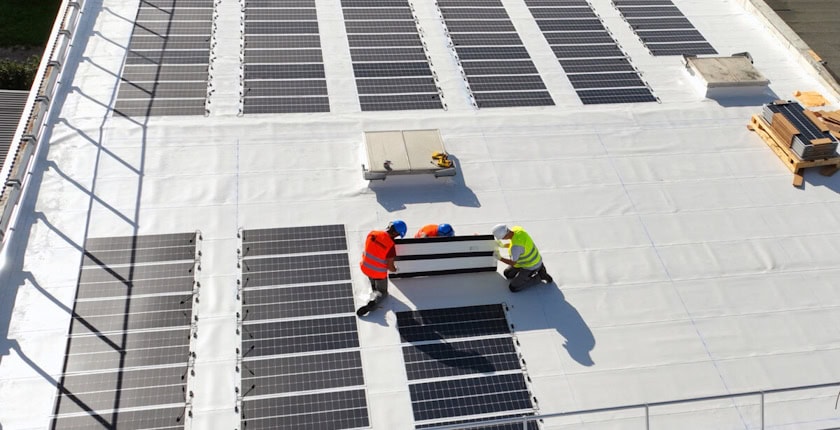
France-based Heliup has been awarded the Gold European Solar Startup Award 2025 for its Stykon solar PV panels for flat rooftops.

Following a successful online pitch, Heliup, Aevy and suena were nominated by the expert panel as finalists.

Yannick Veschetti, President and Co-founder of Heliup, Gautier Moulin, Co-founder and Chief Operating Officer of Aevy, and Felix Heimke, Senior Product Manager at suena, presented their work on stage at the SolarPower Summit 2025.

Yannick Veschetti stressed there is over four billion square meters of available large rooftop space in the European Union. Heliup wants to harness the potential of this available rooftop space and fast-track solar installations across Europe, he added.

Veschetti: The startup is committed to revolutionizing solar energy with lightweight solutions manufactured in Europe
The startup is committed to revolutionizing solar energy with lightweight solutions manufactured in Europe that unlock the potential of commercial and industrial rooftops, Veschetti pointed out.
According to the startup, solar panels have considerable weight which, combined with around 15 kilograms per square meter for the fixing structures, is not compatible with a large proportion of existing building roofs.

To address the issue, Heliup uses a patented CEA technology developed for over three years at France-based Institut National de l’Energie Solaire (INES).

The unique technology is based on the conservation of thin glass and on an innovative installation concept, the startup said.
The solar panel is 60% lighter than conventional panels
The Stykon range is intended for flat roofs, with an innovative, simple and quick installation system based on gluing the panel directly onto the roof’s waterproofing membrane. It is 60% lighter than conventional panels while maintaining the same level of performance and durability, Heliup added.

SolarPower Europe explained that Heliup’s panels are lightweight, at five kilos per square meter. They have an efficiency of 20% and are resistant to extreme weather conditions. The equipment is made in Europe and has an easy and fast installation process, the organization said.

“Only with these forward-thinking innovators can we strengthen Europe’s competitiveness and guarantee a swift energy transition,” SolarPower Europe CEO Walburga Hemetsberger stated.

The award jury panel comprised Jenny Chase, Solar Analyst at BloombergNEF; Stefan Müeller, Co-Founder, Shareholder and Board Member at Enerparc AG; Felix Krause, Managing Partner at Vireo Ventures; and Michael Schmela, Director of Market Intelligence at SolarPower Europe.

https://balkangreenenergynews.com/heliu ... onal-ones/
Fermat
Mensajes: 2139
Registrado: Mié Mar 02, 2022 5:42 am

Re: Notas de energías renovables

Mensaje sin leer por Fermat »

Este desarrollo todavía está en etapa de embrión, pero habrá que ver que sale.

Paneles solares lavables, plegables… y sin plomo: ¿es orgánico el futuro?
Enerzine, 02-May-2025

Imagen

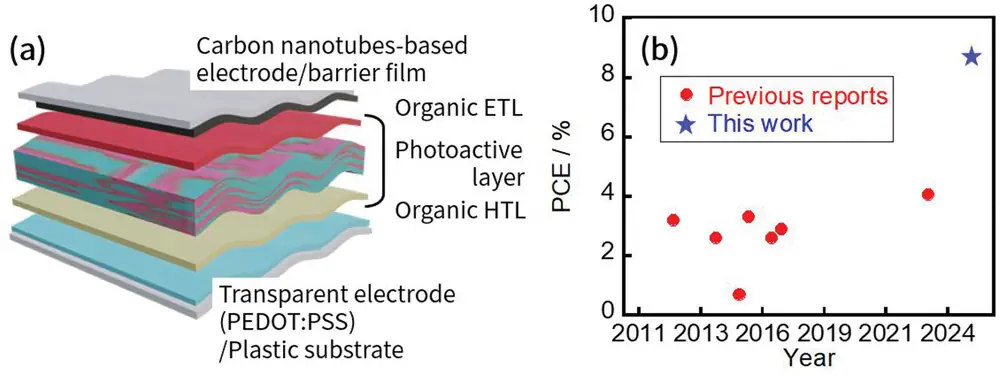
A medida que se acelera la transición energética, una tecnología discreta podría cambiar las reglas del juego en el sector de las energías renovables. Investigadores de la Universidad de Kanazawa, en colaboración con REIKO Co. y la Queen's University de Kingston, han anunciado el desarrollo de células solares totalmente orgánicas (AOSC) con una eficiencia del 8,7%, duplicando el rendimiento de los modelos anteriores. Esta progresión, aunque modesta en comparación con el récord de las celdas de silicio (>27%) o de los paneles basados en perovskita (>26%), marca un paso significativo para un sector que durante mucho tiempo ha sido marginal.

Los paneles solares tradicionales, fundamentales para producir energía verde, plantean desafíos ambientales persistentes. Su fabricación requiere procesos intensos en energía y su final de vida plantea problemas de salud. Los módulos de silicio, por ejemplo, incorporan materiales potencialmente tóxicos (plomo, óxidos metálicos) y costosos de reciclar. Incluso las alternativas emergentes, como las células de perovskita, utilizan compuestos preocupantes.

Los AOSC, fabricados con materiales de carbono, ofrecen una alternativa menos intrusiva. Su composición totalmente orgánica permite su incineración sin emisión de sustancias peligrosas, reduciendo el impacto ambiental y los costes de eliminación. Esta característica responde a una creciente demanda de soluciones adaptables a usos específicos, como la integración paisajística o el uso temporal.

Innovaciones técnicas: electrodos para el rendimiento
El logro de los equipos radica en optimizar los componentes clave de los AOSC. El electrodo transparente, elemento vital para captar la luz, ha sido rediseñado en torno a PEDOT:PSS, un polímero conductor. Este material, depositado a una temperatura moderada (80°C) sin el uso de ácidos o bases corrosivos, preserva la integridad de las capas orgánicas sensibles. Con una resistencia eléctrica inferior a 70 Ω/sq, garantiza un transporte eficiente de electrones.

Otro avance: el método de laminación de capas activas. Ensamblar películas delgadas sin alterar sus propiedades representa un desafío técnico. Los científicos solucionaron esta dificultad fabricando los electrodos por separado sobre soportes protectores, antes de integrarlos en el dispositivo final. Este enfoque evita los daños causados por los procesos tradicionales basados en disolventes.

Aplicaciones específicas, pero obstáculos persistentes
Con una eficiencia del 8,7%, las AOSC no competirán inmediatamente con los gigantes fotovoltaicos. Su fuerza reside en nichos específicos: agricultura sostenible, energía portátil o planificación urbana innovadora. Su ligereza y flexibilidad permiten considerar instalaciones en superficies complejas – cubiertas redondeadas, fachadas de edificios – donde los paneles rígidos no son aptos.

Sin embargo, todavía existen algunos obstáculos. La durabilidad a largo plazo de los materiales orgánicos, sensibles a la humedad y a las variaciones térmicas, aún está por demostrar. Además, es necesario reducir el coste de producción para atraer un mercado dominado por tecnologías maduras. Finalmente, el rendimiento actual se mide en celdas pequeñas; está por verse su uso en módulos industriales.

Imagen
(a) Gráfico de células solares totalmente orgánicas; b) eficiencias de conversión de energía de las células solares orgánicas en este estudio y en informes anteriores.

¿Mejor diversificación de soluciones energéticas?
Esta investigación destaca un movimiento más amplio: la carrera por la eficiencia no puede ocultar la necesidad de diversificar las opciones tecnológicas. Si bien el silicio y la perovskita siguen siendo esenciales para instalaciones a gran escala, las AOSC representan una respuesta adecuada a limitaciones ecológicas y espaciales específicas. Su desarrollo se enmarca en una lógica de complementariedad, donde cada tecnología responde a un segmento de necesidades energéticas.

Los próximos años serán decisivos. Si los investigadores pueden estabilizar el rendimiento y al mismo tiempo reducir los costos, estas células podrían establecerse gradualmente en sectores anteriormente desatendidos. Una trayectoria que, sin eclipsar a los gigantes actuales, abre perspectivas para una transición energética más inclusiva y resiliente.

Léxico AOSC (All-Organic Solar Cells): Dispositivos fotovoltaicos fabricados con materiales orgánicos a base de carbono, reciclables por incineración sin emisiones tóxicas.
PEDOT:PSS: Polímero conductor utilizado para electrodos transparentes, depositado a baja temperatura (80°C) para preservar las capas orgánicas frágiles.
Perovskita: Material cristalino utilizado en células solares de nueva generación, que ofrece alta eficiencia (>26%) pero controvertido por el uso de compuestos tóxicos (plomo).
Eficiencia (PCE): tasa de conversión de energía solar en electricidad, medida en un 8,7% para las AOSC, en comparación con >27% para el silicio.
Materiales orgánicos: Compuestos de carbono biodegradables, evitando los riesgos para la salud asociados a los metales pesados en los paneles tradicionales.
Electrodo transparente: Capa conductora que permite el paso de la luz capturando electrones, optimizado aquí mediante PEDOT:PSS.
Laminación: Técnica de ensamblaje de capas activas sin disolventes agresivos, preservando la integridad de películas orgánicas sensibles.

Articulo: « Unlocking High-Performance in All-Organic Solar Cells by the Development of Organic Electrodes with no Acid and High-Temperature Treatment and the Effective Preparation Thereof on Organic Multi-layer Films» https://advanced.onlinelibrary.wiley.co ... .202419813 (Acceso libre)

https://www.enerzine.com/des-panneaux-s ... 84-2025-05
Fermat
Mensajes: 2139
Registrado: Mié Mar 02, 2022 5:42 am

Re: Notas de energías renovables

Mensaje sin leer por Fermat »

Desarrollan un supercondensador que supera sus límites
Redacción Enerzine 12-May-2025

Imagen

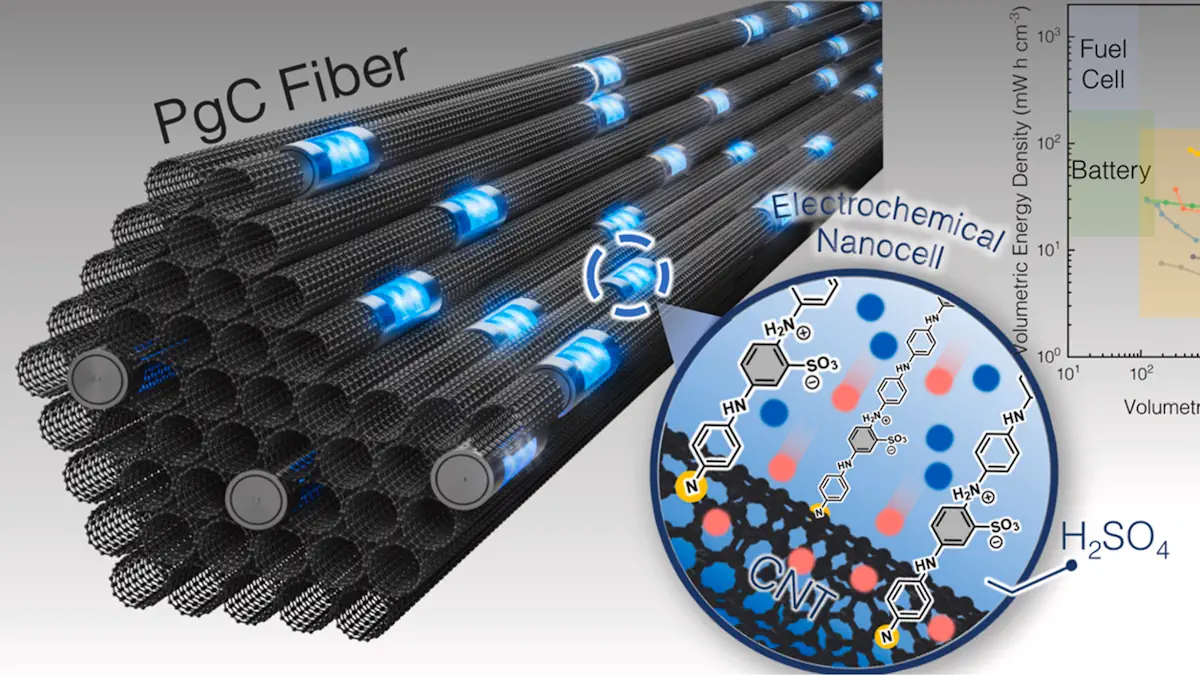
Un equipo de investigación coreano ha desarrollado un supercondensador de alto rendimiento que podría convertirse en la próxima generación de baterías. La tecnología desarrollada por los investigadores supera las limitaciones de los supercondensadores existentes utilizando una innovadora estructura de fibra compuesta por nanotubos de carbono de pared simple (CNT Wikipedia) y el polímero conductor polianilina (PANI Wikipedia).

En comparación con las baterías convencionales, los supercondensadores ofrecen una carga más rápida y una mayor densidad de potencia, con menos degradación a lo largo de decenas de miles de ciclos de carga y descarga. Sin embargo, su densidad energética relativamente baja limita su uso durante periodos prolongados, lo que ha limitado su empleo en aplicaciones prácticas como vehículos eléctricos y drones.

Para resolver este problema, los investigadores unieron química y uniformemente, a escala nanométrica, nanotubos de carbono de pared simple (CNT) altamente conductores a polianilina (PANI) procesable y barata. El resultado es una sofisticada estructura de fibra que mejora simultáneamente el flujo de electrones e iones, lo que permite crear un supercondensador capaz de almacenar más energía y liberarla más rápidamente.

El supercondensador desarrollado ha demostrado mantener un rendimiento estable incluso tras más de 100.000 pruebas de carga y descarga, y ser duradero incluso en entornos de alta tensión. Gracias a estas características, la tecnología puede utilizarse para sustituir o complementar los sistemas existentes de baterías. En los vehículos eléctricos, por ejemplo, puede proporcionar una fuente de alimentación eficiente con carga rápida para mejorar la autonomía y el rendimiento.

Otras aplicaciones, como drones y robots, podrían beneficiarse de un mayor tiempo de actividad y fiabilidad. Además, la fibra compuesta desarrollada (CNT-PANI) es muy flexible mecánicamente, por lo que se puede enrollar y doblar, lo que la hace idónea para su aplicación en dispositivos electrónicos de última generación, como los dispositivos portables.

Otro resultado importante de la investigación es la reducción de los costes de producción y la posibilidad de fabricarlos en serie. A pesar de sus excelentes propiedades, los nanotubos de carbono de pared simple (SWCNT) han sido difíciles de comercializar debido a sus elevados costes de producción, pero los investigadores resolvieron este problema combinándolos con un polímero conductor barato, la polianilina (PANI). Además, han sentado las bases para la producción masiva mediante un proceso sencillo y recientemente han logrado desarrollar estructuras similares a películas basadas en esta tecnología, lo que ha permitido avanzar la comercialización.

https://www.enerzine.com/mise-au-point- ... 84-2025-05
Fermat
Mensajes: 2139
Registrado: Mié Mar 02, 2022 5:42 am

Re: Notas de energías renovables

Mensaje sin leer por Fermat »

Un poco como una nota de prensa (véase la ultima sentencia), pero interesante avance en todo caso.

Swiss Clean-Energy Startup Produces Diesel From Solar Power
Synhelion says using the power of the sun to make fuel could help decarbonize shipping

Yusuf Khan, WSJ Pro, May 15, 2025 2:00

Imagen
The historic steamboat Gallia cruising on Lake Lucerne. Photo: SGV AG

Swiss clean-energy startup Synhelion has used solar-made diesel to power a steamboat, demonstrating a potential means of decarbonizing shipping and aviation.

The Lake Lucerne Navigation Co. used Synhelion’s solar diesel to power a 110-year-old steamboat across Switzerland’s Lake Lucerne, which Synhelion says is a world first. The company used the fuel to heat water in tanks to generate steam to power the vessel.

“For us it’s a nice showcase but really this is just the starting point,” said Philipp Furler, chief executive of Synhelion. The company is aiming to create sustainable fuels for the shipping and aviation industries. The Lake Lucerne test was simply a proof of concept, the company said.

“Global shipping is really the target here. They will require sustainable marine fuels,” Furler said.

How it works
Synhelion converts concentrated solar energy into high-temperature heat energy. That heat is used to turn carbon dioxide and methane sourced from agricultural waste into hydrogen and carbon monoxide. Molecules of those gases can then be combined to produce longer hydrocarbons such as diesel, which can then be used as a fuel source. Crucially, the fuel can be used without the need to modify existing fossil-fuel engine types.

Biofuels that can be used in existing engines are referred to as “drop in” fuels. The company is looking at shipping, aviation and road transport as markets where its fuels could be deployed.

Synhelion says that by using its solar fuel, an estimated 80% of greenhouse-gas emissions could be saved over the course of a journey, based on life-cycle assessments.

Why now
The transport industry accounts for between a fifth and quarter of global greenhouse-gas emissions, according to the International Energy Agency. Every sector within it is looking at ways to decarbonize.

Imagen
Philipp Furler, chief executive of Synhelion. Photo: Synhelion

The International Maritime Organization recently approved a legally binding framework for shippers to reduce their emissions. The IMO’s framework pushes vessel operators to source green fuels, with volumes rising over time, or balance their emissions through credits.

Meanwhile the aviation sector’s Corsia carbon credit system has been developed to offset the sector’s emissions, as access to sustainable aviation fuel rises over time. Currently volumes of SAF remain limited, though legislation in jurisdictions like Europe have made it mandatory for airlines to source green fuels, with volumes again rising over time.

Synhelion expects the shipping industry will need 24 million metric tons of sustainable liquid fuel by 2050, while aviation will require 192 million tons by the same date.

Daniel Rüdisüli, an investor in Synhelion and board member, said his family office, Swiss KMU Partners, made its initial investment two years ago because it saw a large demand for sustainable fuels and it felt the technology was scalable. “The market is just there, customers are there. It’s just ‘Can you scale up and create the value needed by the market?’”

So far Synhelion has raised 90 million Swiss francs, equivalent to $107 million, and is producing its solar fuels from a pilot commercial plant in Jülich, Germany. It’s exploring its next plant to scale up production in places like Spain, Morocco and Oman, areas with abundant renewable energy resources.

“Now it’s about scaling up, which is capex intensive,” said Furler. “This is currently a challenge, we need capital to do that.”

https://www.wsj.com/articles/swiss-clea ... x_artPos=0
Fermat
Mensajes: 2139
Registrado: Mié Mar 02, 2022 5:42 am

Re: Notas de energías renovables

Mensaje sin leer por Fermat »

Como la nota anterior, esta es casi una nota de prensa buscando inversionistas.

Transforman residuos agrícolas... en una batería revolucionaria
Gabin .B, L’Energeek, 11-May-2025

Descubre cómo SorbiForce, una startup ucraniana, está reinventando el almacenamiento de energía con baterías ecológicas.

Imagen
Transforman residuos agrícolas... en una batería revolucionaria | L'EnerGeek

En un mundo que busca soluciones sostenibles, SorbiForce, una startup ucraniana, destaca por su enfoque innovador en el almacenamiento de energía. Al ofrecer baterías ecológicas y sostenibles, la empresa desempeña un papel clave en la transición hacia una energía más limpia. Con el aumento de los desafíos ambientales, esta tecnología está atrayendo la atención por sus múltiples innovaciones tecnológicas y su potencial impacto en la forma de consumir energía.

El papel de las baterías en la transición hacia la energía limpia
Las baterías se han vuelto esenciales para almacenar la electricidad producida por fuentes renovables, como paneles solares y aerogeneradores. Permiten mantener el flujo de energía con radiación solar débil o poco viento. Gracias a su capacidad para estabilizar el suministro, son claves para el cambio a soluciones más ecológicas. SorbiForce se inscribe en esta dinámica con soluciones de almacenamiento adaptadas a las necesidades actuales y preparándose para las futuras.

El auge de SorbiForce y su ingeniosa instalación
SorbiForce, lanzada a finales de la década de 2010 en U____A, ha tenido que afrontar importantes desafíos geopolíticos. La G........ ruso-ucraniana obligó a la startup a trasladarse a Arizona, Estados Unidos. Esta inteligente decisión le permitió gozar del apoyo del Centro de Innovación de la Universidad de Arizona, donde forma parte de una incubadora de startups. Bajo el liderazgo de Serhii Kaminskyi, científico de materiales y director ejecutivo, y con Kevin Drolet a cargo del marketing, SorbiForce está bien posicionada para innovar en el campo del almacenamiento de energía.


Una batería innovadora con características excepcionales
La batería diseñada por SorbiForce destaca por su diseño sostenible. Fabricada íntegramente con carbono, agua, sal y residuos agrícolas, no contiene metales, lo que reduce significativamente los riesgos ambientales (evitando así las baterías de sodio). La transferencia de electrones entre el cátodo y el ánodo se basa en un innovador proceso físico que utiliza electrodos de carbono, lo que hace a la batería completamente ignífuga.

Cada celda incorpora además una capa ultraporosa de carbono. Kevin Drolet explica: «Si se puede construir algo que no se incendie, es realmente valioso; podemos hacerlo a la vez que implementamos una economía circular para el almacenamiento de energía».

Un historial ambiental positivo y una reciclabilidad ejemplar
Las baterías SorbiForce tienen un impacto muy limitado en el medio ambiente gracias a su composición predominantemente orgánica. De hecho, el 95 % de los materiales son biodegradables y el 5 % restante se puede reutilizar. Al final de su vida útil, hasta el 95 % de los componentes se transforman en materiales orgánicos (una gran ventaja para el planeta).

Este diseño ecológico contrasta con los métodos tradicionales, a menudo arriesgados, utilizados para reciclar las baterías convencionales. Las soluciones de SorbiForce satisfacen la urgente demanda de tecnologías más seguras y respetuosas con el medio ambiente.

Prospectivas comerciales prometedoras
SorbiForce planea lanzar sus innovadoras baterías este año con unidades piloto de entre 60 kWh y 150 kWh, alojadas en contenedores especialmente diseñados. Para apoyar este ambicioso desarrollo, la empresa también está considerando recaudar 5 millones de dólares en financiación.

Al integrar estas nuevas tecnologías en el mercado estadounidense, donde abundan los recursos, SorbiForce espera reducir los costes en comparación con las baterías de iones de litio.

https://lenergeek.com/2025/05/11/ils-tr ... tionnaire/
Fermat
Mensajes: 2139
Registrado: Mié Mar 02, 2022 5:42 am

Re: Notas de energías renovables

Mensaje sin leer por Fermat »

Aquí se produce el combustible del futuro: la planta (de metanol) más grande del mundo abre en Dinamarca.
Por Steffen Neupert y Magnus Vincents Fischer, 13 de mayo, 08:20

Ha sido un dilema convertir la planta en realidad. El sector cree que el gobierno debe intervenir.

Imagen
En resumen, el e-metanol se produce a partir de agua, CO₂ y electricidad verde, y puede usarse en tanques de buques portacontenedores. Foto: European Energy

En teoría, puede reemplazar a los combustibles fósiles en algunas de las industrias más contaminantes del mundo. Aunque la tecnología existe y empresas como Mærsk, Lego y Novo Nordisk están interesadas, la producción del llamado metanol verde nunca ha despegado.

Al menos hasta ahora.
“Es fundamental que alguien implemente en la práctica.”
Jeppe Juul, director de política de transporte del Consejo para la Transición Ecológica.
El martes, European Energy y Mitsui & Co. inaugurarán la mayor fábrica comercial de e-metanol del mundo. Está ubicada en Kassø, en el sur de Jutlandia (Dinamarca)

De esta manera, logran el éxito donde muchos otros han fracasado. Sin embargo, esto es solo una gota en el océano, entre otros, para la asociación del sector energético, Green Power Denmark.

Es un gran proyecto, pero no es suficiente, afirma la directora de Energías Renovables y Power-to-X, Camilla Holbech.

Imagen
La nueva planta es propiedad de Solar Park Kassø ApS, propietaria también de la planta de células solares cercana. Foto: European Energy.

Un dilema del huevo y la gallina
El metanol, también llamado alcohol de madera, puede extraerse, entre otros, de combustibles fósiles.

Pero también puede fabricarse de forma ecológica. Por ejemplo, usando energía eólica y células solares para convertir el agua en hidrógeno, que posteriormente puede combinarse con CO₂ y convertirse en metanol "verde" o e-metanol.

En teoría, podría sustituir a los combustibles fósiles en algunas de las industrias más contaminantes del mundo, como la producción de plásticos o los tanques de los buques portacontenedores.

La planta de Kassø no es ni de lejos la primera de su tipo, pero en los últimos años se han detenido varias plantas similares. Por ejemplo, cuando Ørsted abandonó su planta de metanol ecológico en Suecia, Flagship One, en agosto.

Iniciar una producción a gran escala de e-metanol es muy costoso. Por lo tanto, las empresas responsables también tienen que contar de antemano con suficientes clientes que lo compren a un precio adecuado.

Y según el entonces director ejecutivo de Ørsted, Mads Nipper, ese no fue el caso el verano pasado. Simplemente no es rentable producir combustibles verdes a la escala que una empresa como Ørsted necesita, declaró a TV 2.

El problema es que los compradores potenciales se encuentran en un dilema similar. Porque si quieren cambiar al metanol, también deben asegurarse de que haya suficiente a un precio adecuado.

Pero el dilema del huevo y la gallina parece haberse resuelto.
Análisis rápido
Jens Nymark, Analista de negocios, TV 2
La necesaria reconversión del transporte y la producción requiere del éxito de la planta de Aabenraa (Kassø), tras los preocupantes fracasos sufridos con una serie de proyectos de metanol.
El empresario energético Knud Erik Andersen demuestra que es posible producir y vender metanol verde en el mercado libre, pero se necesita más que un hombre rico y visionario para crear una alternativa energética económicamente sostenible.
Se necesitan más clientes, como Lego, Mærsk y Novo Nordisk, dispuestos a pagar más por el metanol verde. La planta de Kassø da motivos para esforzarse.
Lego y Novo están listos para comprar
Cuando la planta de Kassø E-methanol comience a producir metanol, varias de las empresas más grandes de Dinamarca estarán listas a comprarlo.

Entre ellos destaca el gigante naviero Maersk, que, según su responsable de transición energética, Morten Bo Christiansen, "tiene una enorme necesidad" de encontrar formas nuevas y más respetuosas con el medio ambiente para transportar mercancías por todo el mundo.

Inicialmente, Maersk usará el combustible de Kassø en el buque Laura Maersk, botado en 2023 como el primero de su nueva flota de portacontenedores ecológicos.

Desde entonces, el sector naviero ha encargado más de 300 barcos que pueden navegar con metanol. Por lo tanto, el mercado necesita proyectos como este, afirma Christiansen.

Imagen
Laura Maersk es un buque portacontenedores alimentador, un tipo de buque portacontenedores más pequeño diseñado para distribuir contenedores entre puertos grandes y pequeños. Foto: Tom Little / Ritzau Scanpix

Pero Maersk no es el único gigante empresarial danés que ha estado presente en la fiesta de inauguración en Kassø.

Tanto Lego como Novo Nordisk están representados en la ceremonia.

Las dos empresas tienen en común el uso de grandes cantidades de plástico. Y ese plástico se fabricará, en mayor medida, a partir del e-metanol de la planta Power-to-X de Kassø. Mientras Lego lleva años trabajando para que sus icónicos ladrillos de plástico sean ecológicos, Novo Nordisk intenta que el plástico de sus jeringas para medicamentos sea más sostenible.

Por ejemplo, este podría ser el de las jeringas utilizadas para inyecciones de los dos superéxitos de la farmacéutica, Wegovy y Ozempic.

Kassø es un paso importante.
La planta de Kassø se construye junto al parque solar de 340 hectáreas, que también suministrará parte de la electricidad a la planta. Se estima que la planta de e-metanol de Kassø puede producir alrededor de 42.000 toneladas de metanol al año.

En el vídeo a continuación (NB! Ver en fuente), puede ver cómo se extrae el primer metanol en Kassø. Y si se pregunta al Consejo para la Transición Ecológica, no es demasiado pronto para que se abra el grifo.

Actualmente, el metanol verde es la mejor opción como combustible para sustituir al petróleo en lugares donde no se puede utilizar electricidad. Así lo afirma el responsable de política de transporte del consejo, Jeppe Juul.
«Es fundamental que alguien lo haga real, ya que estamos muy atrasados en la transición verde, por ejemplo, en el transporte marítimo», afirma.

En Green Power Denmark, la directora de Energías Renovables y Power-to-X, Camilla Holbech, también se muestra entusiasmada con la inauguración de hoy. Pero no tiene sentido dormirse en los laureles por mucho tiempo, enfatiza.
- La industrialización de Power-to-X apenas comienza. Kassø es un paso importante para demostrar que se puede llegar a fin de mes. Ahora, el siguiente paso es ampliar la escala y reducir los precios, afirma Camilla Holbech.

El estado debe impulsar el mercado.
A pesar de que la planta de Kassø ya ha conseguido compradores para su metanol verde, según Camilla Holbech, aún existen importantes problemas para obtener ganancias para las nuevas plantas de e-metanol. Por lo tanto, en un informe a principios de mes, Green Power Denmark instó al gobierno a intervenir.

En concreto, la organización del sector cree que el estado debería apoyar los nuevos proyectos de e-metanol actuando como intermediario entre los productores y los compradores del combustible verde.

Y el dinero debería provenir de los ingresos estatales provenientes de las cuotas de CO₂ en la aviación y el transporte marítimo, según la propuesta.
—En Dinamarca, contamos con todos los requisitos para impulsar este mercado emergente y convertirnos en un líder mundial. Pero eso requiere que actuemos ya —afirma Camilla Holbech—.

¿Pero es realmente necesario ese impulso? La planta de Kassø demuestra sin duda que los productores y compradores de e-metanol pueden reunirse sin la ayuda del estado.
-En cierto modo, uno se pregunta si Kassø es viable. Pero para que podamos dar los siguientes pasos y ampliar nuestra escala, nuestra cobertura del mercado demuestra que es necesario cubrir los riesgos para quienes producirán los combustibles.

https://nyheder.tv2.dk/business/2025-05 ... -i-danmark
Fermat
Mensajes: 2139
Registrado: Mié Mar 02, 2022 5:42 am

Re: Notas de energías renovables

Mensaje sin leer por Fermat »

‘Cold’ manufacturing approach to make next-gen batteries
By Ty Tkacik, Apr 24, 2025
Fabrication challenge for solid-state batteries solved through advanced technique, researchers report

Imagen
Penn State researchers, including graduate student Ta-Wei Wang (pictured), recently published their work investigating the application of an advanced manufacturing technique in battery creation. Credit: Provided by Hongtao Sun/Penn State.

UNIVERSITY PARK, Pa. — Lithium-ion batteries have been a staple in device manufacturing for years, but the liquid electrolytes they rely on to function are quite unstable, leading to fire hazards and safety concerns. Now, researchers at Penn State are pursuing a reliable alternative energy storage solution for use in laptops, phones and electric vehicles: solid-state electrolytes (SSEs).

According to Hongtao Sun, assistant professor of industrial and manufacturing engineering, solid-state batteries — which use SSEs instead of liquid electrolytes — are a leading alternative to traditional lithium-ion batteries. He explained that although there are key differences, the batteries operate similarly at a fundamental level.

“Rechargeable batteries contain two internal electrodes: an anode on one side and a cathode on the other,”" Sun said. “Electrolytes serve as a bridge between these two electrodes, providing fast transport for conductivity. Lithium-ion batteries use liquid electrolytes, while solid-state batteries use SSEs.”

Solid-state batteries offer improved stability and safety when compared to traditional lithium-ion batteries but face several manufacturing and conductivity challenges, Sun explained. For example, the high temperatures introduced in the fabrication process, especially with ceramic-based SSEs, can hinder their production and practical implementation.

To overcome this challenge, Sun and his team used a technique known as cold sintering — a process where powdered materials are heated, treated with a liquid solvent, and compressed into a denser form — to incorporate a highly conductive ceramic-polymer composite SSE known as LATP-PILG. The method is referred to as “cold” because it operates at significantly lower processing temperatures than traditional sintering, instead relying on applied pressure and a small amount of liquid solvent to complete the process. They published their approach in Materials Today Energy.

Traditional ceramic-based SSEs are typically composed of polycrystalline grains — materials made up of hundreds of tiny crystals — separated by grain boundaries. According to Sun, these grain boundaries are considered defects that hinder the transport of conductive ions. To reduce conduction loss in ceramic-based SSEs, Sun’s team co-sintered a poly-ionic liquid gel (PILG) with LATP ceramics to form a polymer-in-ceramic composite SSE, an ideal material for use due to its stability and high conductivity.

The PILG acts as a highly conductive “grain boundary” in the SSE, facilitating ion transport across engineered boundaries rather than through defect-prone natural interfaces. Sun said the team initially attempted to use traditional high temperature sintering to develop their new SSEs, but they immediately ran into problems.

“One of the fabrication challenges of LATP-based composite SSEs is that the sintering temperature for ceramic is very high, to the point that traditional sintering would actually burn up any additives such as the polymer compound before the ceramic could be properly densified,” Sun said. “This is why we had to implement cold sintering, to keep temperatures much lower.”

Imagen
The cold sintering process involves taking a small amount of powder material, loaded in the center of the system, and using a combination of heat, pressure and liquid solvent to create a dense bulk material for use in SSEs. Credit: Provided by Hongtao Sun/Penn State.

Cold sintering technology was originally developed in 2016 through a research project led by Clive Randall, director of Penn State’s Materials Research Institute and distinguished professor of materials science and engineering. Its application to developing solid-state batteries came in 2018, when a postdoctoral scholar in the laboratory of Enrique Gomez, professor of chemical engineering and interim associate dean for equity and inclusion for the College of Engineering, cold sintered ceramic composite electrolytes.

According to Sun, traditional sintering requires temperatures around 80% of the melting point of the material, which for ceramic compounds like LATP can easily reach 900 to 1,000 degrees Celsius.

“For this application, we were able to keep our sintering temperatures very low, around 150 degrees Celsius,” Sun said. “This allows us to integrate different kinds of materials into a highly dense form using the cold sintering process, regardless of their distinct processing temperatures.”

By sintering the LATP ceramics with PILG gel, Sun’s team developed composite SSEs with high ionic conductivity at room temperature, among other strengths.

“In addition to improved conductivity, our polymer-in-ceramic composite SSE showcased a very wide voltage window, between 0 to 5.5 volts,” Sun said, explaining that traditional liquid electrolytes have a window of 0 to 4 volts. “The large voltage window of our ceramic SSEs supports the use of high-voltage cathodes, allowing the battery to generate more energy overall.”

For Sun, the applications of this cold sintering technology can someday go beyond improving batteries. He said he believes that cold sintering has big implications for how companies approach using ceramic composite materials in general manufacturing, as well as in more specific industries like semiconductor manufacturing.

“Our next goal is to develop a sustainable manufacturing system that supports large-scale production and recyclability, as that will be the key towards industrial applications for this technology,” Sun said. “That is the big vision we hope to work towards over the coming years.”

In addition to Sun, the co-authors include Ta-Wei Wang, Seok Woo Lee, and Juchen Zhang, Penn State doctoral students in industrial and manufacturing engineering, and Bo Nie, an alumnus of the Penn State industrial and manufacturing engineering graduate program.
https://news.engr.psu.edu/2025/sun-hong ... eries.aspx

Artículo: Probing cold sintering-regulated interfaces and integration of polymer-in-ceramic solid-state electrolytes https://doi.org/10.1016/j.mtener.2025.10182
https://www.sciencedirect.com/science/a ... via%3Dihub (NB! Por subscripción)
Fermat
Mensajes: 2139
Registrado: Mié Mar 02, 2022 5:42 am

Re: Notas de energías renovables

Mensaje sin leer por Fermat »

New liquid battery could break solar storage barrier for Aussie homes
20 May 2025

Engineers have developed a water-based battery that could help Australian households store rooftop solar energy more safely, cheaply, and efficiently than ever before.

Their next-generation “flow battery” opens the door to compact, high-performance battery systems for homes, and is expected to be much cheaper than current $10,000 lithium-ion systems.

Flow batteries have been around for decades but have traditionally been used in large-scale energy storage due to their large size and slow charge speeds.

Wanqiao Liang, the study’s first author and PhD candidate at the Department of Materials Science and Engineering, said the team’s new membrane design fixes the speed problem making it ideal for households and a promising key player in the energy transition market.

“We’ve taken a safe, affordable chemistry and made it fast enough to capture rooftop solar in real time,” Ms Liang said.

“We’ve engineered a membrane that finally makes organic flow batteries competitive for residential and mid-scale storage. It opens the door to systems that are not only cheaper, but also safer and simpler to scale.”

While some companies already produce flow batteries, Monash’s design stands out for its combination of safety, low cost and high-speed performance – a balance few systems around the world have achieved.

“The key was improving ion selectivity; letting the good ions through quickly while keeping unwanted ones out. Our new membrane achieves this balance, allowing fast, stable operation even at high current densities,” Ms Liang said.

“We outperformed the industry-standard Nafion membrane in both speed and stability – running 600 high-current cycles with virtually no capacity loss – that’s a major leap forward for this kind of battery.”

Wanqiao said a careful balance was crucial to making these batteries work for rooftop solar at home.

“This is the kind of battery you’d want in your garage,” Ms Liang said.

“It’s non-toxic, non-flammable, and made from abundant materials, all while keeping up with solar power on a sunny day.”

The team is now 3D printing prototype systems and testing them under real-world conditions.

“If the prototypes keep performing the way we expect, this could be on the market in a few years’ time,” Ms Liang said.

Dr Cara Doherty, a study co-author from the CSIRO, said flow batteries store energy in liquids rather than solid materials like those found in lithium-ion batteries, making them cheaper to manufacture, safer to operate and easier to scale.

“Flow batteries work a bit like two fish tanks joined by a membrane barrier that allows ions to pass through, enabling energy storage and release,” Dr Doherty said.

“We’ve developed a new type of membrane inside the battery that guides the flow of materials better – kind of like adding lanes to a highway. That means faster charging, longer battery life and better performance overall.”

In 2018, Monash installed a 1MWh redT energy (now known as Invinity energy) storage system – the largest behind-the-meter commercial setup in Australia and the first of its kind globally – as a core part of the microgrid at its Clayton campus. The Monash microgrid plays a central role in the University’s goal to become 100 per cent energy self-sufficient and is a key part of achieving Net Zero emissions by 2030.

Now, Monash is home to the next big leap in clean energy storage.

https://onlinelibrary.wiley.com/doi/10. ... .202505383 (NB! Acceso libre)
Fermat
Mensajes: 2139
Registrado: Mié Mar 02, 2022 5:42 am

Re: Notas de energías renovables

Mensaje sin leer por Fermat »

El estudio hable de economías, pero también de subvenciones. Habra que leerlo con detenimiento.

Nuevo estudio: La energía solar térmica reduce a la mitad los costes de calor de proceso
Erneuerbareenergien, 21 de mayo de 2025

Imagen
El calor de proceso generado con colectores de tubos de vacío ha sido rentable desde hace tiempo. - © Oliver Killig/Ritter

La energía solar térmica puede aprovechar todo su potencial generando calor de procesamiento. Un nuevo estudio demuestra que los sistemas generalmente son rentables y se amortizan en pocos años.

Un sistema para producir calor de proceso compuesto por energía solar térmica y gas puede reducir los costes para las empresas de 14 a 8 céntimos por kilovatio hora. Este es uno de los resultados de un estudio realizado por investigadores del Instituto Fraunhofer de Sistemas de Energía Solar (ISE). Encargado por la Asociación Alemana de la Industria Solar (BSW-Solar), examinaron las tres tecnologías solares térmicas comunes (colectores de placa plana, colectores de tubos de vacío (wikipedia) y colectores cilindroparabólicos en más de 6.000 configuraciones de sistemas con diversos sistemas de almacenamiento. Utilizaron simulaciones dinámicas de sistemas para determinar los costos de cada tecnología y compararlos con los costos de producción convencional.

Energía solar térmica disponible para todas las temperaturas
Los resultados mostraron que invertir en tecnología de calor de proceso solar es, en muchos casos, más económico que operar sistemas exclusivamente basados en combustibles fósiles. En todos los escenarios examinados, cuando la energía solar participa más del 50 % en la generación de calor, estos sistemas son más económicos que los basados solamente en combustibles fósiles. «Nuestro estudio demuestra que la energía solar térmica es económicamente viable y fácil de planificar para numerosas aplicaciones en la industria alemana», resume Hans-Martin Henning, director de Fraunhofer ISE. «Es adecuada tanto para aplicaciones de baja temperatura como para temperaturas medias, como las que se requieren en la industria química», afirma.

Periodo de amortización extremadamente corto
En el estudio, los científicos también examinaron los periodos de amortización. En el caso de los sistemas solares térmicos para calor de proceso, este plazo oscila entre tres y ocho años, según el escenario, la ubicación y el rango de temperatura. El requisito previo es solicitar una subvención a la inversión a través de la Ayuda Federal para la Eficiencia Energética y de los Recursos en las Empresas (EEW).

Ahorro de 40 millones de euros
Por ejemplo, en la planta de Würzburg (una de las tres ubicaciones examinadas), la inversión en un sistema de colectores cilindroparabólicos de 34 megavatios se amortiza en 5,5 años. Los investigadores calcularon el sistema en combinación con un sistema de almacenamiento a plena carga de 20 horas. Al mismo tiempo, una empresa con este sistema de este tipo podría ahorrar más de 40 millones de euros en energía durante una vida útil de 20 años, incluyendo los costes de inversión de 12,6 millones de euros.

La energía solar térmica es económicamente viable
Para BSW-Solar, este estudio demuestra que el calor solar térmico debería desempeñar un papel más importante en el futuro. «La energía solar térmica es una solución económicamente viable y competitiva para el suministro de calor industrial en Alemania», comenta Carsten Körnig, director general de BSW-Solar, sobre los resultados. «La suposición, lamentablemente aún generalizada, de que la energía solar térmica es antieconómica en latitudes templadas ha sido refutada. En cambio, el estudio de Fraunhofer confirma que el diseño optimizado de sistemas y las medidas de financiación específicas pueden mejorar significativamente la eficiencia económica», subraya.

Opción para reducir las emisiones de CO2
Según BSW-Solar, el calor de proceso industrial representa una parte significativa de la demanda energética total de Alemania. Sin embargo, hasta ahora se ha cubierto en gran partes con combustibles fósiles. El gas natural desempeña un papel fundamental en este aspecto. Con temperaturas de hasta 400 grados Celsius, la energía solar térmica es una importante opción sin emisiones de CO2 para el suministro de calor a una parte importante de la industria, destacan representantes del sector.

El estudio «Calor de proceso solar para la industria alemana» (NB! en alemán) está disponible para su descarga en el sitio web de BSW-Solar. También puede leer (EUR 15) el actual Anuario de calor solar, publicado por Gentner Energy Media.

https://www.erneuerbareenergien.de/tech ... zesswaerme
Fermat
Mensajes: 2139
Registrado: Mié Mar 02, 2022 5:42 am

Re: Notas de energías renovables

Mensaje sin leer por Fermat »

New Sodium-Air Fuel Cell Could Revolutionize Electric Aviation
Massachusetts Institute of Technology May 28 2025

Batteries are nearing their limits in terms of how much power they can store for a given weight. That's a serious obstacle for energy innovation and the search for new ways to power airplanes, trains, and ships. Now, researchers at MIT and elsewhere have come up with a solution that could help electrify these transportation systems.

Instead of a battery, the new concept is a kind of fuel cell — which is similar to a battery but can be quickly refueled rather than recharged. In this case, the fuel is liquid sodium metal, an inexpensive and widely available commodity. The other side of the cell is just ordinary air, which serves as a source of oxygen atoms. In between, a layer of solid ceramic material serves as the electrolyte, allowing sodium ions to pass freely through, and a porous air-facing electrode helps the sodium to chemically react with oxygen and produce electricity.

In a series of experiments with a prototype device, the researchers demonstrated that this cell could carry more than three times as much energy per unit of weight as the lithium-ion batteries used in virtually all electric vehicles today. Their findings are being published today in the journal Joule, in a paper by MIT doctoral students Karen Sugano, Sunil Mair, and Saahir Ganti-Agrawal; professor of materials science and engineering Yet-Ming Chiang; and five others.

"We expect people to think that this is a totally crazy idea," says Chiang, who is the Kyocera Professor of Ceramics. "If they didn't, I'd be a bit disappointed because if people don't think something is totally crazy at first, it probably isn't going to be that revolutionary."

And this technology does appear to have the potential to be quite revolutionary, he suggests. In particular, for aviation, where weight is especially crucial, such an improvement in energy density could be the breakthrough that finally makes electrically powered flight practical at significant scale.

"The threshold that you really need for realistic electric aviation is about 1,000 watt-hours per kilogram," Chiang says. Today's electric vehicle lithium-ion batteries top out at about 300 watt-hours per kilogram — nowhere near what's needed. Even at 1,000 watt-hours per kilogram, he says, that wouldn't be enough to enable transcontinental or trans-Atlantic flights.

That's still beyond reach for any known battery chemistry, but Chiang says that getting to 1,000 watts per kilogram would be an enabling technology for regional electric aviation, which accounts for about 80 percent of domestic flights and 30 percent of the emissions from aviation.

The technology could be an enabler for other sectors as well, including marine and rail transportation. "They all require very high energy density, and they all require low cost," he says. "And that's what attracted us to sodium metal."

A great deal of research has gone into developing lithium-air or sodium-air batteries over the last three decades, but it has been hard to make them fully rechargeable. "People have been aware of the energy density you could get with metal-air batteries for a very long time, and it's been hugely attractive, but it's just never been realized in practice," Chiang says.

By using the same basic electrochemical concept, only making it a fuel cell instead of a battery, the researchers were able to get the advantages of the high energy density in a practical form. Unlike a battery, whose materials are assembled once and sealed in a container, with a fuel cell the energy-carrying materials go in and out.

The team produced two different versions of a lab-scale prototype of the system. In one, called an H cell, two vertical glass tubes are connected by a tube across the middle, which contains a solid ceramic electrolyte material and a porous air electrode. Liquid sodium metal fills the tube on one side, and air flows through the other, providing the oxygen for the electrochemical reaction at the center, which ends up gradually consuming the sodium fuel. The other prototype uses a horizontal design, with a tray of the electrolyte material holding the liquid sodium fuel. The porous air electrode, which facilitates the reaction, is affixed to the bottom of the tray.

Tests using an air stream with a carefully controlled humidity level produced a level of more than 1,500 watt-hours per kilogram at the level of an individual "stack," which would translate to over 1,000 watt-hours at the full system level, Chiang says.

The researchers envision that to use this system in an aircraft, fuel packs containing stacks of cells, like racks of food trays in a cafeteria, would be inserted into the fuel cells; the sodium metal inside these packs gets chemically transformed as it provides the power. A stream of its chemical byproduct is given off, and in the case of aircraft this would be emitted out the back, not unlike the exhaust from a jet engine.

But there's a very big difference: There would be no carbon dioxide emissions. Instead the emissions, consisting of sodium oxide, would actually soak up carbon dioxide from the atmosphere. This compound would quickly combine with moisture in the air to make sodium hydroxide — a material commonly used as a drain cleaner — which readily combines with carbon dioxide to form a solid material, sodium carbonate, which in turn forms sodium bicarbonate, otherwise known as baking soda.

"There's this natural cascade of reactions that happens when you start with sodium metal," Chiang says. "It's all spontaneous. We don't have to do anything to make it happen, we just have to fly the airplane."

As an added benefit, if the final product, the sodium bicarbonate, ends up in the ocean, it could help to de-acidify the water, countering another of the damaging effects of greenhouse gases.

Using sodium hydroxide to capture carbon dioxide has been proposed as a way of mitigating carbon emissions, but on its own, it's not an economic solution because the compound is too expensive. "But here, it's a byproduct," Chiang explains, so it's essentially free, producing environmental benefits at no cost.

Importantly, the new fuel cell is inherently safer than many other batteries, he says. Sodium metal is extremely reactive and must be well-protected. As with lithium batteries, sodium can spontaneously ignite if exposed to moisture. "Whenever you have a very high energy density battery, safety is always a concern, because if there's a rupture of the membrane that separates the two reactants, you can have a runaway reaction," Chiang says. But in this fuel cell, one side is just air, "which is dilute and limited. So you don't have two concentrated reactants right next to each other. If you're pushing for really, really high energy density, you'd rather have a fuel cell than a battery for safety reasons."

While the device so far exists only as a small, single-cell prototype, Chiang says the system should be quite straightforward to scale up to practical sizes for commercialization. Members of the research team have already formed a company, Propel Aero, to develop the technology. The company is currently housed in MIT's startup incubator, The Engine.

Producing enough sodium metal to enable widespread, full-scale global implementation of this technology should be practical, since the material has been produced at large scale before. When leaded gasoline was the norm, before it was phased out, sodium metal was used to make the tetraethyl lead used as an additive, and it was being produced in the U.S. at a capacity of 200,000 tons a year. "It reminds us that sodium metal was once produced at large scale and safely handled and distributed around the U.S.," Chiang says.

What's more, sodium primarily originates from sodium chloride, or salt, so it is abundant, widely distributed around the world, and easily extracted, unlike lithium and other materials used in today's EV batteries.

The system they envisage would use a refillable cartridge, which would be filled with liquid sodium metal and sealed. When it's depleted, it would be returned to a refilling station and loaded with fresh sodium. Sodium melts at 98 degrees Celsius, just below the boiling point of water, so it is easy to heat to the melting point to refuel the cartridges.

Initially, the plan is to produce a brick-sized fuel cell that can deliver about 1,000 watt-hours of energy, enough to power a large drone, in order to prove the concept in a practical form that could be used for agriculture, for example. The team hopes to have such a demonstration ready within the next year.

Sugano, who conducted much of the experimental work as part of her doctoral thesis and will now work at the startup, says that a key insight was the importance of moisture in the process. As she tested the device with pure oxygen, and then with air, she found that the amount of humidity in the air was crucial to making the electrochemical reaction efficient. The humid air resulted in the sodium producing its discharge products in liquid rather than solid form, making it much easier for these to be removed by the flow of air through the system. "The key was that we can form this liquid discharge product and remove it easily, as opposed to the solid discharge that would form in dry conditions," she says.

Ganti-Agrawal notes that the team drew from a variety of different engineering subfields. For example, there has been much research on high-temperature sodium, but none with a system with controlled humidity. "We're pulling from fuel cell research in terms of designing our electrode, we're pulling from older high-temperature battery research as well as some nascent sodium-air battery research, and kind of mushing it together," which led to the "the big bump in performance" the team has achieved, he says.

The research team also included Alden Friesen, an MIT summer intern who attends Desert Mountain High School in Scottsdale, Arizona; Kailash Raman and William Woodford of Form Energy in Somerville, Massachusetts; Shashank Sripad of And Battery Aero in California, and Venkatasubramanian Viswanathan of the University of Michigan. The work was supported by ARPA-E, Breakthrough Energy Ventures, and the National Science Foundation, and used facilities at MIT.nano.

https://www.azocleantech.com/news.aspx?newsID=35745

Artículo: Sodium-air fuel cell for high energy density and low-cost electric power (Acceso libre)
Fermat
Mensajes: 2139
Registrado: Mié Mar 02, 2022 5:42 am

Re: Notas de energías renovables

Mensaje sin leer por Fermat »

New Lithium-CO2 Battery Powers Devices While Battling Emissions
Reviewed by Lexie Corner, May 21 2025

Researchers at the University of Surrey have developed environmentally friendly batteries that could help reduce greenhouse gas emissions while offering higher energy storage capacity. These lithium-CO₂ “breathing” batteries present a more sustainable alternative to conventional lithium-ion batteries, generating electricity while actively absorbing carbon dioxide.

Imagen
Image Credit: University of Surrey

The performance of lithium–CO₂ batteries has historically been limited by rapid degradation, poor rechargeability, and dependence on expensive rare materials such as platinum. However, researchers at the University of Surrey have addressed these issues by introducing a low-cost catalyst: caesium phosphomolybdate (CPM).

Lab experiments and computational modeling showed that this catalyst significantly enhanced battery performance, enabling over 100 charge-discharge cycles, increased energy storage capacity, and more efficient charging with lower power requirements.

If commercialized, these batteries could help reduce emissions from vehicles and industrial processes. Researchers also suggest they could operate on Mars, where the atmosphere consists of 95 % carbon dioxide.

There is a growing need for energy storage solutions that support our push toward renewable power while also tackling the growing threat of climate change. The work on lithium–CO₂ batteries is a potential game-changer in making that vision a reality.

Gadkar added, “One of the biggest challenges with these batteries is something called ‘overpotential’ – the extra energy needed to get the reaction going. You can think of it like cycling uphill before you can coast. What we have shown is that CPM flattens that hill, meaning the battery loses far less energy during each charge and discharge.”

Teams from the Advanced Technology Institute and Surrey’s School of Chemistry and Chemical Engineering used two approaches to investigate why CPM was so effective. First, they performed post-mortem analysis by disassembling the battery after charge and discharge cycles to observe internal chemical changes.

These tests revealed that lithium carbonate, the compound formed when the battery absorbs CO₂, could be reliably formed and removed, a critical factor for long-term battery operation.

Next, they used density functional theory (DFT) to model the reactions at the material’s surface. The simulations showed that CPM’s stable, porous structure offered an ideal environment for the key chemical reactions involved in battery performance.
What is exciting about this discovery is that it combines strong performance with simplicity. We have shown that it is possible to build efficient lithium–CO₂ batteries using affordable, scalable materials no rare metals required. Our findings also open the door to designing even better catalysts in the future.

Dr Daniel Commandeur, Surrey Future Fellow, University of Surrey
The findings support the development of more efficient, affordable, and practical battery materials. With further research into the interactions between catalysts, electrodes, and electrolytes, lithium–CO₂ batteries could become a viable and scalable option for clean energy storage, while also contributing to carbon dioxide reduction.

Journal Reference:
Masoudi, M., et al. (2025) Ultralow Overpotential in Rechargeable Li–CO2 Batteries Enabled by Caesium Phosphomolybdate as an Effective Redox Catalyst. Advanced Science.
doi.org/10.1002/advs.202502553 (Acceso libre!)

https://www.azocleantech.com/news.aspx?newsID=35733
Fermat
Mensajes: 2139
Registrado: Mié Mar 02, 2022 5:42 am

Re: Notas de energías renovables

Mensaje sin leer por Fermat »

Una nueva técnica de refrigeración aumenta la potencia y la longevidad de los paneles solares
por phth_5mn1u48j 3 de junio de 2025
Stefaan De Wolf | Qiaoqiang Gan


Un nuevo material compuesto refrigera pasivamente los paneles solares, aumentando la potencia en un 12,9 % y la vida útil en más de un 200 %.

Un equipo internacional de investigadores en Arabia Saudí ha desarrollado un nuevo material compuesto a base de acrilato que mejora el rendimiento de las células solares. La adhesión del material compuesto a las células solares desplegadas en Arabia Saudí durante semanas aumentó significativamente la potencia y la longevidad, a la vez que redujo el consumo de electricidad por las células (SIC).

La energía solar es un objetivo estratégico fundamental para las economías verdes en muchos países, y más de tres cuartas partes de las instalaciones son DE células solares. Sin embargo, la energía solar fiable y sostenible presenta importantes desafíos. Los paneles solares comerciales convierten aproximadamente el 20 % de los rayos del sol en electricidad. El resto se absorbe como calor o se refleja. Además, el calor reduce el rendimiento y la vida útil de las células solares, lo que significa que deben reemplazarse antes de lo previsto. Por lo tanto, las células solares necesitan refrigeración, pero los sistemas de refrigeración como ventiladores y bombas requieren electricidad. La refrigeración pasiva, en cambio, no.

"Nos especializamos en materiales que permiten la refrigeración pasiva. Estos materiales son delgados y pueden colocarse en diversos sistemas que requieren refrigeración para funcionar, como invernaderos y células solares, sin afectar su rendimiento", afirmó Qiaoqiang Gan, profesor de la Universidad KAUST, quien dirigió el estudio.

En este nuevo estudio, realizado por el Centro de Excelencia para Energías Renovables y Tecnologías de Almacenamiento de la KAUST, Gan y sus colegas prepararon un compuesto higroscópico de cloruro de litio y poliacrilato de sodio que absorbe la humedad del aire por la noche y la libera durante el día. El poliacrilato es un polímero económico, y su proceso de fabricación no requiere productos químicos agresivos ni reactivos especializados, a diferencia de otros compuestos higroscópicos utilizados para la refrigeración, lo que reduce aún más el coste.

Durante semanas de funcionamiento en el desierto saudí, las células solares unidas con este material resultaron 9,4 °C más frías que las que no lo utilizaban. Además, aumentaron su potencia en más de un 12 % y su vida útil en más de un 200 %, a la vez que redujeron sus costes de producción de electricidad en casi un 20 %.

Además de Arabia Saudí, se realizaron experimentos en algunas de las regiones más frías de Estados Unidos continental, bajo la lluvia, para demostrar que la tecnología de refrigeración pasiva funciona en cualquier entorno.

El Sr. Gan probó el material compuesto en células solares proporcionadas por el profesor de la KAUST Stefaan De Wolf, cuyo equipo de investigación ha batido récords mundiales en rendimiento de células solares con sus diseños personalizados.

«Este trabajo es un excelente ejemplo de la combinación de la diversa experiencia de KAUST. Probamos la nueva tecnología de refrigeración en las células solares de mayor rendimiento en diversos entornos y obtuvimos excelentes resultados en todos los casos», concluyó el Sr. De Wolf.

Artículo: «Streamlined fabrication of an inexpensive hygroscopic composite for low maintenance evaporative cooling of solar panels» DOI:10.1016/j.mser.2025.101016 (NB! Por subscripción)

https://www.enerzine.com/une-nouvelle-t ... 65-2025-06
Fermat
Mensajes: 2139
Registrado: Mié Mar 02, 2022 5:42 am

Re: Notas de energías renovables

Mensaje sin leer por Fermat »

Prácticamente una nota de prensa. A observar con espíritu crítico y esperar los resultados:

Airloom's bizarre ground-hugging wind turbine gets 'utility-scale' pilot
Loz Blain, June 30, 2025

Imagen
Vertical wing blades are attached to cables running around a suspended track in the very odd Airloom design Airloom Energy

An exceptionally odd clean energy project backed by Bill Gates has broken ground near Rock River, Wyoming, where a wind turbine that turns convention on its head will get a chance to prove its remarkable claim: wind power at 1/3rd of the cost.

Offshore wind turbines continue to get bigger and taller - indeed, they're quite possibly the biggest machines that humanity has ever built with large moving parts. The 26-MW behemoth that Dongfang Electric Corporation is building, for example, will have three blades, each about six times the width of a Boeing 747, attached to a nacelle towering 607 ft (185 m) over the surface.

As these gargantuan blades swing through the top of their circle, they'll top out at a 1,115 ft (340 m) altitude – and this is where they'll generate peak power, because all else being equal, wind becomes stronger and steadier the higher you get from the surface - at least, when you're fairly close to the Earth.

And you can bet your bottom dollar somebody's working on a turbine with a diameter even bigger than Dongfang's 1,107 ft (310 m), because the bigger your turbine gets, the bigger the swept area reward becomes for adding another bit of length at the ends of the blades.

So as energy giants like Dongfang tie themselves in knots to deal with the materials and logistics required by these mammoth wind turbines, it's truly odd to watch Wyoming company Airloom going the opposite way.


Introduction to AirLoom Energy
Airloom's technology involves a bunch of 33-ft long vertical wings, attached to a cable, running around an oval-shaped track that's suspended about 82 ft (25 m) off the ground on a series of poles. Those are the numbers for a 2.5-MW commercial-scale version, anyway; thus far, the idea has only been tested at smaller scale.


Introduction to Airloom energy

The blades change orientation as they turn around at the ends of the oval, angling themselves for optimal power as they run down the long side sections, and power takeoffs harvest the linear motion from the cable to run generators.

There is absolutely no question: a traditional big, tall fan-on-a-stick turbine will have better access to high-quality wind. Airloom's contention appears to be that this doesn't matter, because energy is a money in, money out game, and its gear will be so much cheaper to install than great big turbines that it will deliver energy at a lower overall cost.

Imagen
At "utility scale," Airloom claims it will deliver power at 1/3rd the cost of a traditional horizontal-axis wind turbine (HAWT) Airloom Energy

The 2.5-MW turbine setup described above, for example, could arrive on site loaded on a single truck, and you won't need a massive crane (or one of these funky climbing cranes) to install it. In 2023, the company was claiming that an Airloom setup would cost about a tenth of what a three-blade horizontal-axis turbine of equivalent power does. Add in land, and a wind farm would be about a quarter the cost. Repairs and service would be a breeze, and much cheaper over the Airloom's 30-year service life then anything you need to do on top of a huge turbine tower.

Thus, says Airloom, the all-important LCoE (Levelized Cost of Electricity) figure would be around one third as much as traditional wind – already one of the world's cheapest forms of energy.

Well, I guess we'll see. After a pretty quiet couple of years, during which the company managed to pull in another 13-odd million dollars in funding and DoD contracts, Airloom has now announced that it's broken ground on a research and development site, where it will "build out its first utility-scale turbine."

Imagen
The team found enough for eight matching shovels in their 2024 fundraising round Airloom Energy

"Current energy technologies can’t meet the growing complexity and demand of the next decade," says Neal Rickner, CEO of Airloom Energy, in a press release. "With growing electricity needs, we need more flexible systems that can be built quickly, and deployed anywhere at large scale. That’s the only way we’re going to achieve and maintain energy security and independence. Airloom’s proprietary, US-manufactured turbines do just that – replacing bulky, costly models with low-cost compact designs that generate more energy in less space. This groundbreaking marks a key milestone in validating our power curve and achieving essential cost efficiencies for wind energy."

Annoyingly, the release gives precious little detail. Will this be the 50-kilowatt version with 3 m (10 ft) wings, running around a 45 x 22-m (148 x 72-ft) track with 5-m (16-ft)-tall towers they spec out in the video embedded above? Or the 250-kW version? Airloom isn't saying. Nor is the company saying when it will be ready to show off, other than that it expects to "complete its pilot site build out ahead of commercial demos beginning in 2027."

Imagen
A 1.3-MW version would require a 400 m (1,312) long, 36 m (118 ft) wide oval track Airloom Energy

I guess this is one good thing about a nice super-cheap idea; it ought to be super-cheap to test. Not quick, though, apparently. And we'll be very surprised if "utility scale" gets close to a megawatt in this instance.

We were skeptical about this one in 2023, and we remain skeptical today – albeit not quite as skeptical as CleanTechnica's Michael Barnard, who laid an absolute steamer on the idea back when it first came out of stealth. The investments involved, from companies including Bill Gates' Breakthrough Energy and Chris Sacca's Lowercarbon Capital, are relatively minor for the energy space, and perhaps they reflect a similar skepticism among VCs.

But we shall see... In just a few short years...

Source: AirLoom Energy

https://newatlas.com/energy/airloom-wind-turbine-pilot/
Fermat
Mensajes: 2139
Registrado: Mié Mar 02, 2022 5:42 am

Re: Notas de energías renovables

Mensaje sin leer por Fermat »

Researchers achieve record-setting perovskite tandem solar cell with novel NIR-harvesting molecule
National University of Singapore, 25-Jun-2025
Edited by Lisa Lock, reviewed by Andrew Zinin

Imagen
A team of scientists from the National University of Singapore achieved a record power conversion efficiency of 26.4% with a new perovskite-organic tandem cell design (right). Credit: National University of Singapore

Scientists at the National University of Singapore (NUS) have demonstrated a perovskite–organic tandem solar cell with a certified world-record power conversion efficiency of 26.4% over a 1 cm2 active area—making it the highest-performing device of its kind to date. This milestone is driven by a newly designed narrow-bandgap organic absorber that significantly enhances near-infrared (NIR) photon harvesting, a long-standing bottleneck in thin-film tandem solar cells.

This latest research breakthrough was achieved under the leadership of Assistant Professor Hou Yi, who is a Presidential Young Professor in the Department of Chemical and Biomolecular Engineering under the College of Design and Engineering at NUS and leads the Perovskite-based Multijunction Solar Cells Group at the Solar Energy Research Institute of Singapore (SERIS) at NUS.

The NUS research team published their work in the journal Nature on 25 June 2025.

Unlocking the promise of tandem solar cells
Perovskite and organic semiconductors both offer widely tunable bandgaps, enabling tandem cells to approach very high theoretical efficiencies. "Thanks to their light weight and flexible form factor, perovskite–organic tandem solar cells are ideally suited to power applications that are run directly on devices such as drones, wearable electronics, smart fabrics and other AI-enabled devices," said Asst. Prof. Hou.

However, the absence of efficient NIR thin-film absorbers—which help to capture sunlight in the NIR region more efficiently and hence improve the overall efficiency of tandem cells—has kept perovskite–organic tandem cells lagging behind alternative designs.

Harnessing the near-infrared
To overcome this challenge, Asst. Prof. Hou and his team developed an asymmetric organic acceptor with an extended conjugation structure, enabling absorption deep into the NIR region while maintaining a sufficient driving force for efficient charge separation and promoting ordered molecular packing. Ultrafast spectroscopy and device physics analyses confirmed that this design achieves high free charge carrier collection with minimal energy loss.

Building on the organic subcell's performance, the researchers stacked it beneath a high-efficiency perovskite top cell, interfacing the two layers with a transparent conducting oxide (TCO)-based interconnector.

The newly designed tandem cell achieved a power conversion efficiency of 27.5% on 0.05-cm2 samples and 26.7% on 1-cm2 devices, with the 26.4% result independently certified. These findings mark the highest certified performance to date among perovskite–organic, perovskite–CIGS, and single-junction perovskite cells at comparable size.

"With efficiencies poised to exceed 30%, these flexible films are ideal for roll-to-roll production and seamless integration onto curved or fabric substrates—think self-powered health patches that harvest sunlight to run onboard sensors, or smart textiles that monitor biometrics without the need for bulky batteries," noted Asst. Prof. Hou.

In the next phase of their research, the NUS team will focus on enhancing real-world operational stability and advancing toward pilot-line manufacturing—crucial steps in bringing flexible, high-performance solar technology to market.

More information: Zhenrong Jia et al, Efficient near-infrared harvesting in perovskite–organic tandem solar cells, Nature (2025)
DOI: 10.1038/s41586-025-09181-x


Journal information: Nature

https://techxplore.com/news/2025-06-per ... l-nir.html
Responder