Notas de energías renovables

Aquí puede comentar todo aquello que no sea de política, de economía, de temas sociales del día a día
Fermat
Mensajes: 2139
Registrado: Mié Mar 02, 2022 5:42 am

Re: Notas de energías renovables

Mensaje sin leer por Fermat »

Mechanochemical breakthrough unlocks cheap, safe, powdered hydrogen
Loz Blain, July 18, 2022

Imagen
Deakin researchers have described a novel mechanochemical process that can store gases safely in powders, using very little energy, in a repeatable processDepositphotos

Australian scientists say they've made a "eureka moment" breakthrough in gas separation and storage that could radically reduce energy use in the petrochemical industry, while making hydrogen much easier and safer to store and transport in a powder.

Nanotechnology researchers, based at Deakin University's Institute for Frontier Materials, claim to have found a super-efficient way to mechanochemically trap and hold gases in powders, with potentially enormous and wide-ranging industrial implications.

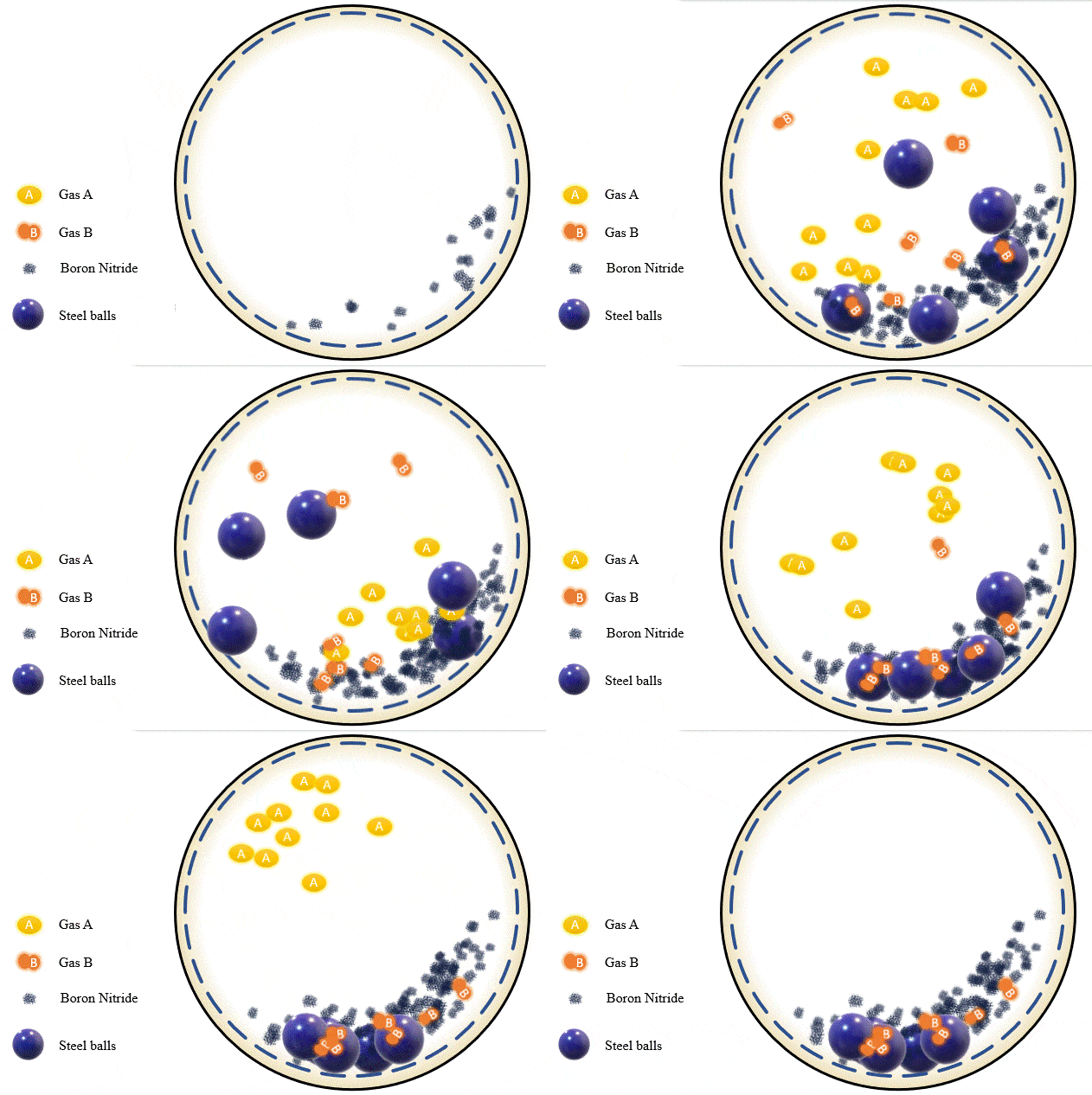
Mechanochemistry is a relatively recently coined term, referring to chemical reactions that are triggered by mechanical forces as opposed to heat, light, or electric potential differences. In this case, the mechanical force is supplied by ball milling – a low-energy grinding process in which a cylinder containing steel balls is rotated such that the balls roll up the side, then drop back down again, crushing and rolling over the material inside.

The team has demonstrated that grinding certain amounts of certain powders with precise pressure levels of certain gases can trigger a mechanochemical reaction that absorbs the gas into the powder and stores it there, giving you what's essentially a solid-state storage medium that can hold the gases safely at room temperature until they're needed. The gases can be released as required, by heating the powder up to a certain point.

Imagen
Mechanochemical separation of gases using ball milling

The process is repeatable, and Professor Ian Chen, co-author on the new study published in the journal Materials Today, tells us via phone that the boron nitride powder used in the first experiments only loses "about a couple of percent" of its absorption capability each storage and release cycle. "Boron nitride is very stable," he tells us, "and graphene too. We're looking at a restoration treatment that can clean the powders and restore their absorption levels, but we need to prove that it'll work."

Seguir leyendo:
https://newatlas.com/energy/mechanochem ... -hydrogen/
Fermat
Mensajes: 2139
Registrado: Mié Mar 02, 2022 5:42 am

Re: Notas de energías renovables

Mensaje sin leer por Fermat »

EV batteries: Recycling startup extracts cobalt, nickel 100 times faster
Japan's Emulsion Flow Technologies aims to begin commercial operations next year

Imagen
Hirochika Naganawa, chief technology officer at Japanese startup Emulsion Flow Technologies, previously worked for Japan's atomic energy agency. (Photo courtesy of Emulsion Flow Technologies)

TOMOYUKI ENDO, Nikkei staff writer, July 15, 2022 15:15 JST

TOKYO -- As companies scramble for the resources to power electric vehicles, a Japanese startup aims to slash the time and cost needed to extract cobalt, nickel and other metals from used EV batteries.

Hirochika Naganawa and his team at Japanese startup Emulsion Flow Technologies say they have developed an extraction process that is 100 times faster than the conventional approach. The company is working on commercializing the process.

"Technology that hadn't changed since around 1950 has finally moved forward," said Naganawa, EFT's chief technology officer and the man behind the discovery.

The "emulsion" in EFT refers to a frothy blend of oil and water. Oil and water normally do not mix. When they do form an emulsion, they are slow to separate.

EFT's method creates a flow that carries away cobalt, nickel and other metals in a watery solution on tiny droplets of oil. The droplets coalesce quickly, allowing the metals to be collected.

Seguir leyendo:
https://asia.nikkei.com/Business/Startu ... mes-faster
Fermat
Mensajes: 2139
Registrado: Mié Mar 02, 2022 5:42 am

Re: Notas de energías renovables

Mensaje sin leer por Fermat »

Ho por hoy es una técnica experimental, pero obviamente va a evolucionar.

All-in-one solar tower produces jet fuel from CO2, water and sunlight
Loz Blain, July 20, 2022

Imagen
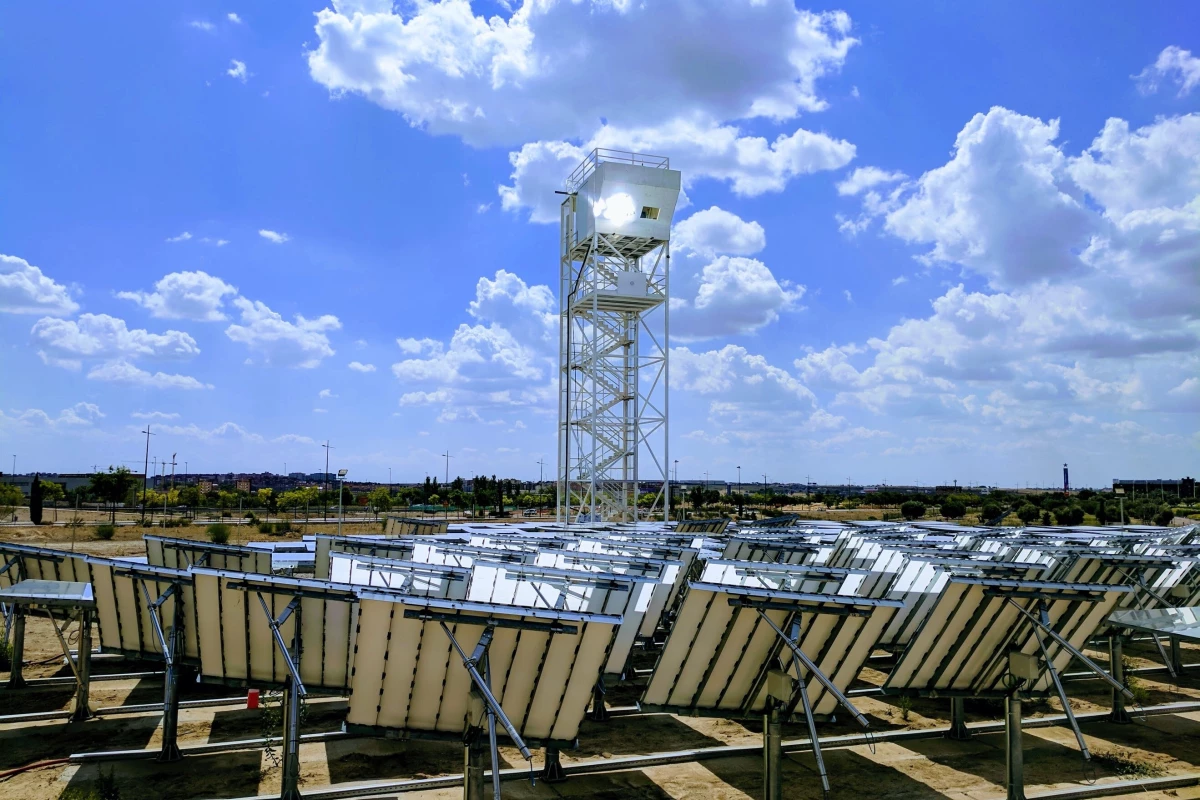
Taking sunlight, water and carbon dioxide as inputs, this solar tower in Spain produces carbon-neutral jet fuel and diesel
ETH Zurich


Taking carbon dioxide, water and sunlight as its only inputs, this solar thermal tower in Spain produces carbon-neutral, sustainable versions of diesel and jet fuel. Built and tested by researchers at ETH Zurich, it's a promising clean fuel project.

Why do we need sustainable aviation fuel (SAF)?
Fossil fuels can be replaced with batteries or hydrogen in cars and trucks – but aircraft are trickier. With more than 25,000 commercial airliners in service today, and service lifetimes around 25 years, airlines are looking to carbon-neutral fuels to bring down their emissions. It's a transitional step, but an important one until clean aviation tech is ready and the entire global fleet can be converted to something else.

Carbon-neutral fuels are drop-in replacements for today's kerosene Jet-A fuel; they mix in with regular fuel and get burned in jet engines as per normal, producing the normal amount of carbon emissions. The difference is that rather than pulling that carbon straight out of the ground, carbon-neutral fuels grab CO2 from elsewhere; it'll still end up in the atmosphere, but at least it does some useful work before it gets there, and every gallon burned is a gallon of conventional fuel that wasn't burned.

How is SAF currently made?
There are a lot of ways to make carbon-neutral fuels – and not all of those are acceptable for other reasons. Biofuels grown from specially raised corn crops, for example, create their own emissions, from fertilizers and farm equipment, and they use land that could otherwise be producing food. Chopping down forests and using the wood as biomass is also out, for reasons that should be obvious, but the fact that there are rules in place around this suggests that even in the sustainability game, there are still bad-faith operators.

Landfill waste-to-jet-fuel plants are popping up here and there, taking municipal garbage or old cooking oil and using that as a feedstock to create syngas, which can be refined into synthetic fuels. But the pyrolysis process usually involved requires a lot of energy – either dirty energy or clean energy that could be used elsewhere – and the feedstock is so wildly random that the resulting fuels sometimes need an extra, energy-intensive cleaning step before they're ready to go save the planet in a Dreamliner.

Another way is to capture carbon directly from other emissions sources, and convert that into fuel. This can be done by using green electricity to power an electrolyzer, then mixing the resulting hydrogen with carbon monoxide to create syngas, which can then be refined into fuels – but there are energy losses at each of these steps.

Which brings us to this new, much simpler design out of ETH Zurich, which has been built and tested at the IMDEA Energy Institute in Spain.

Imagen
The 50-kW pilot reactor, installed in Spain, uses heat from a concentrating solar tower to drive a thermochemical redox cycle - ETH Zurich

ETH Zurich's all-in-one carbon-neutral fuel tower
This pilot plant runs on concentrating solar thermal energy. One hundred and sixty-nine sun-tracking reflector panels, each presenting three square meters (~32 sq ft) of surface area, redirect sunlight into a 16-cm (6.3-in) hole in the solar reactor at the top of the 15-m-tall (49-ft) central tower. This reactor receives an average of about 2,500 suns' worth of energy – about 50 kW of solar thermal power.

Seguir leyendo:
https://newatlas.com/energy/solar-jet-fuel-tower/
Fermat
Mensajes: 2139
Registrado: Mié Mar 02, 2022 5:42 am

Re: Notas de energías renovables

Mensaje sin leer por Fermat »

Abre en el embalse de Alqueva el mayor parque solar flotante de Europa
El mismo es capaz de abastecer de energía a 1.500 familias y mide como cuatro campos de fútbol
Paula Fernández - EFE - Alqueva. (Portugal) | 15·07·22

Imagen
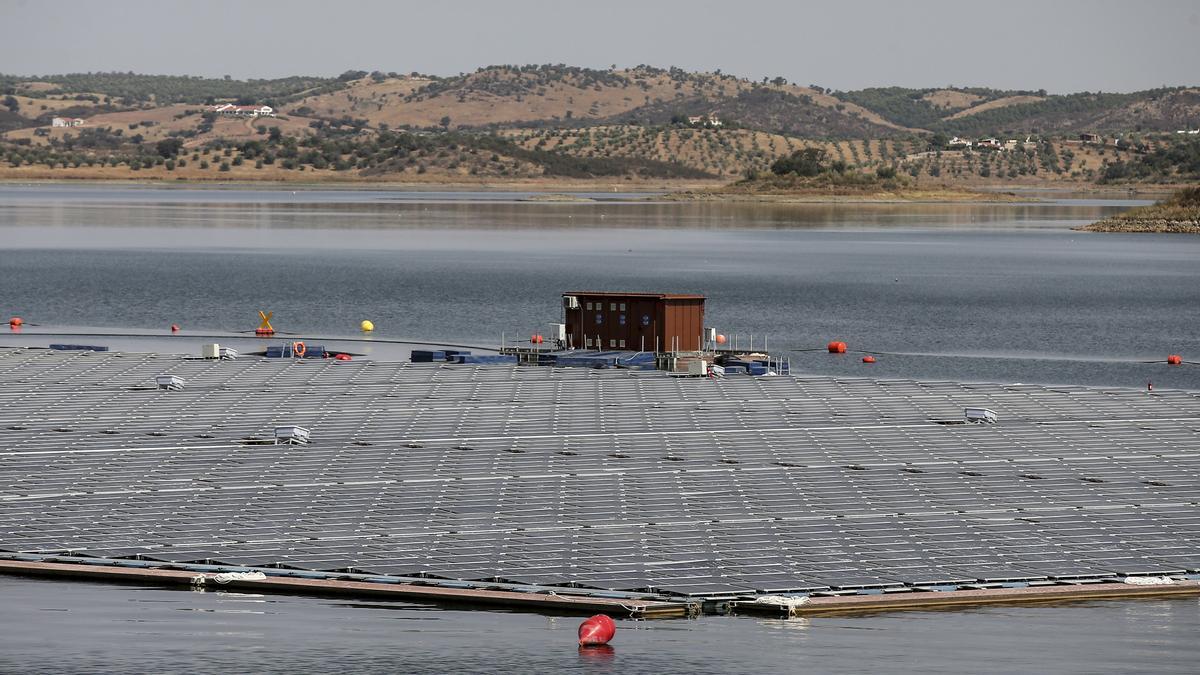
Planta fotovoltaica flotante en Alqueva. NUNO VEIGA. EFE

La eléctrica portuguesa EDP ha inaugurado este viernes el mayor parque solar flotante situado en un embalse de Europa, en Alqueva, capaz de abastecer energía para 1.500 familias y que forma parte de la apuesta de la empresa por las energías renovables en medio de la escalada de precios del gas.

"Las renovables son la respuesta también al tema del coste", defendió el consejero delegado de EDP, Miguel Stilwell d'Andrade, durante la inauguración en Alqueva, en el Alentejo (sur), donde recordó que en Portugal se han conseguido precios en las subastas por debajo de los 20 euros por megavatio hora (MWh).

El parque solar, con una inversión de 6 millones de euros y una única conexión a la red, tiene el tamaño de cuatro campos de fútbol y está formada por cerca de 12.000 paneles fotovoltaicos.

Situada en el mayor embalse de Europa occidental, sobre el río Guadiana y próxima a la frontera con Extremadura, la plataforma se ha construido en unos seis meses y se colocó el pasado mayo en su destino definitivo sobre las aguas del Alqueva, donde ya está en funcionamiento.

El proyecto tiene una capacidad instalada de 5 megavatios (MW), así como 2 megavatios hora (MWh) de almacenamiento en baterías.

Este híbrido entre energía solar, hídrica y baterías es capaz de generar 7,5 gigavatios hora (GWh) al año y abastecer al 30 % de la población de la región circundante.

Una de las novedades de este proyecto respecto a otros son los flotadores, una mezcla de plástico reciclado y compuestos de corcho, que permiten reducir un 16 % su huella de carbono.

Seguir leyendo:
https://www.elperiodicoextremadura.com/ ... 81832.html
Fermat
Mensajes: 2139
Registrado: Mié Mar 02, 2022 5:42 am

Re: Notas de energías renovables

Mensaje sin leer por Fermat »

World’s first large-scale ‘sand battery’ goes online in Finland
Cameron Murray, July 6, 2022

Imagen
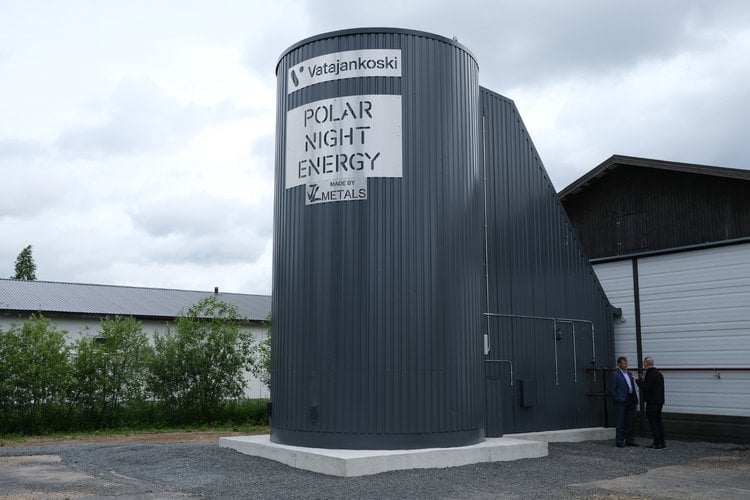
sand battery thermal storage Polar Night Energy’s sand-based thermal storage system. Image: Polar Night Energy.

The first commercial sand-based thermal energy storage system in the world has started operating in Finland, developed by Polar Night Energy.

Polar Night Energy’s system, based on its patented technology, has gone online on the site of a power plant operated by utility Vatajankoski.

The 4×7 metre steel container contains hundreds of tonnes of sand which can be heated to a temperature of 500-600 degrees Celsius. The sand is heated with renewable electricity and stored for use in the local district heating system.

It has a particularly strong use case in Finland which sees long and very cold winters, and was recently cut off from Russian gas supplies over a payments dispute. The storage system’s developers say it is cheap and easy to build.

The system can discharge a maximum of 100kW of heat power and has a total energy capacity of 8MWh, equating to up to 80 hours’ storage duration, but now authorities want to scale the system to one a thousand times bigger, or 8GWh, according to a report from UK broadcaster BBC.

“This innovation is a part of the smart and green energy transition. Heat storages can significantly help to increase intermittent renewables in the electrical grid. At the same time we can prime the waste heat to usable level to heat a city. This is a logical step towards combustion-free heat production,” said Markku Ylönen, co-founder of Polar Night Energy.

Vatajankoski also uses the heat provided by the storage to prime the waste heat recovered from their data servers so that it can also be fed into the district heating network.

It is the second major thermal storage facility based on a unique (if not novel) technological solution that has progressed this week. Swedish public utility Vattenfall is about to start filling a 200MW-rated thermal energy storage facility, effectively a giant water tank, in Berlin.

https://www.energy-storage.news/worlds- ... n-finland/
Fermat
Mensajes: 2139
Registrado: Mié Mar 02, 2022 5:42 am

Re: Notas de energías renovables

Mensaje sin leer por Fermat »

La compañía de energía RWE prevé producir hidrógeno en un parque eólico marino
Tilman Weber 17/07/2022 18:52

Nordsee dos puede ser uno de los primeros parques eólicos marinos comerciales en producir hidrógeno in situ, con turbinas de 15 megavatios.
Imagen
Ilustración de la producción de hidrógeno en la base flotante de un aerogenerador frente a Nantes. El proyecto piloto está programado para iniciar operaciones en 2022. - © Lhyfe/DORiS © Lhyfe/DORiS

Después de la puesta en marcha en 2026, el parque eólico Nordsee Two también podría producir hidrógeno directamente en el área de la planta a partir de la energía eólica que generó. Varias empresas, entre ellas RWE, están desarrollando actualmente la electrólisis de la fuente de energía, especialmente importante y valiosa para la transición energética en Europa, directamente en las plataformas de acceso de los aerogeneradores del proyecto de investigación H2Mare. Si bien está previsto que H2Mare se complete en 2025 con la construcción de una planta piloto de electrólisis de energía eólica marina, Nordsee 2 recién podría empezar a implementar la tecnología comercialmente un año después. RWE está desarrollando el parque eólico Nordsee 2 de 433 megavatios (MW) junto con la empresa canadiense de energía Northland Power. Sin embargo, RWE ahora ha recibido financiación para Nordsee 2 del Fondo de Innovación de la UE, un fondo de subvenciones de la Unión Europea (UE), para el uso de tecnología especialmente innovadora.

Como anuncian ahora RWE y Northland, el sistema de electrólisis producirá el hidrógeno para repostar barcos y generar el suministro de energía de emergencia para los sistemas y la plataforma del transformador a partir de la energía eólica generada por el mismo. A principios de año, los socios formaron una empresa conjunta para la construcción de parques eólicos marinos, que también construirá y operará Nordsee 2. RWE recibió el pago de compensación de la Agencia Federal de Redes (BNetzA) en septiembre de 2021, cuando BNetzA otorgó el contrato del proyecto del campo N3.8, desarrollado principalmente por la autoridad marina BSH. Fue una de las tres adjudicaciones en la primera ronda de licitación del llamado modelo de licitación central de acuerdo con la Ley de Energía Eólica en el Mar (WindSeeG) de 2017. La segunda ronda de licitación de WindSeeG se completará en septiembre de 2022.

Además, los socios ahora hacen que se quiere equipar el proyecto con turbinas de 15 MW. El primer proyecto en el Mar del Norte alemán con los actuales aerogeneradores de mayor potencia será el parque eólico He Dreiht de 900 MW, cuya finalización está prevista actualmente para 2025. Sin embargo, todos los fabricantes de turbinas eólicas que han anunciado turbinas de 15 MW todavía están desarrollando estos sistemas.

Fuente:
https://www.erneuerbareenergien.de/tech ... m-offshore
Fermat
Mensajes: 2139
Registrado: Mié Mar 02, 2022 5:42 am

Re: Notas de energías renovables

Mensaje sin leer por Fermat »

Blowhole wave energy generator exceeds expectations in 12-month test
Loz Blain, July 31, 2022

Imagen
The UniWave 200 has been making reliable, clean energy for Australia's King Island for a year now, delivering better performance than expected

Wave Swell Energy's remarkable UniWave 200 is a sea platform that uses an artificial blowhole formation to create air pressure changes that drive a turbine and feed energy back to shore. After a year of testing, the company reports excellent results.

As we've discussed before, the UniWave system is a floatable device that can be towed to any coastal location and connected to the local energy grid. It's designed so that wave swells force water into a specially designed concrete chamber, pressurizing the air in the chamber and forcing it through an outlet valve. Then as the water recedes, it generates a powerful vacuum, which sucks air in through a turbine at the top and generates electricity that's fed into the grid via a cable.

As a result, it draws energy from the entire column of water that enters its chamber, a fact the team says makes it more efficient than wave energy devices that only harvest energy from the surface or the sea floor.
Imagen
The UniWave 200 in place off King Island, TasmaniaWave Swell Energy

WSE's key innovation here is that one-way generation; other devices that harvest the same effect use bi-directional turbines, requiring the ability to reverse blade pitch or redirect the airflow. WSE says its design allows for far cheaper and simpler turbines, that should also last longer since they're not getting as much salt water splashed through them when a big wave hits. Indeed, all this device's moving parts are above the waterline, a fact that should help extend its service life as well as making it completely harmless to marine life.

Seguir leyendo:
https://newatlas.com/energy/blowhole-wa ... generator/
Fermat
Mensajes: 2139
Registrado: Mié Mar 02, 2022 5:42 am

Re: Notas de energías renovables

Mensaje sin leer por Fermat »

Powdered sodium battery design promises a 15% leap in energy density
Nick Lavars, August 02, 2022

Imagen
Scientists testing a novel chemistry in a coin cell battery configuration have made a promising advance for sodium-ion batteries

With real uncertainty clouding the world's supply of lithium, alternative battery chemistries will be crucial as we continue our uptake of electric vehicles and mobile devices. One exciting candidate in this space is sodium-ion, and a research team in Russia has developed a novel battery of this ilk that boasts some impressive energy density, and may also be resistant to low temperatures.

Sodium-ion batteries are gaining attention as a more sustainable alternative to lithium-ion, owing to the relative abundance and low-cost of the element. These batteries work much like lithium-ion devices, bouncing ions between a pair of electrodes via a liquid electrolyte. The new research, from scientists at Skoltech and Lomonosov Moscow State University, focuses on the negative electrode, called the cathode.

The team has developed a novel cathode material, and one that promises significant gains in energy density. It is a powder made of sodium-vanadium phosphate fluoride, which is also an approach being explored by researchers elsewhere. But by carefully configuring how the atoms are organized within their powder, the scientists believe they've taken a big step forward.

“Both our new material and the one the industry has recently deployed are called sodium-vanadium phosphate fluoride – they’re made of atoms of the same elements," said Skoltech's Stanislav Fedotov, study author. "What makes them different is how those atoms are arranged and in what ratio they are contained in the compound."

The team deployed their novel cathode material in a coin-cell configuration sodium-ion battery and put it to the test, finding that it offered an increase in energy density of up to 15% compared to the current leading designs. Further, the new material could also allow sodium-ion batteries to function in colder climates, according to the researchers.

“Higher energy storage capacity is just one of the advantages of this material," said Fedotov. It also enables the cathode to operate at lower ambient temperatures, which is particularly relevant for Russia.”

The scientists say there is need for more research into these types of materials, but with further work they see these batteries being put to use in heavy electric vehicles such as buses and trucks. Storage of energy from renewable sources such as wind and solar is another possibility.

The research was published in the journal Nature Communications.

Source: Skoltech

https://newatlas.com/energy/cheap-sodiu ... y-density/
Fermat
Mensajes: 2139
Registrado: Mié Mar 02, 2022 5:42 am

Re: Notas de energías renovables

Mensaje sin leer por Fermat »

Amsterdam tendra pronto el primer barco en funcionar con hidrógeno sólido
Eva Segaar, 08-08-2022

A partir del próximo año, un barco funcionará con hidrógeno sólido en el puerto de Ámsterdam. Esto es especial, porque es el primer barco del mundo que navega con borohidruro de sodio, portador de hidrógeno.

Imagen
Así lucirá la nave de hidrógeno | Crédito: Neo Orbis

Luego de una licitación en Europa, a finales de julio se anunció que el buque de hidrógeno llamado Neo Orbis será construido por un astillero de Lauwersoog. Los astilleros holandeses de próxima generación pueden construir el barco de hidrógeno.

Primero en el mundo
El buque de hidrógeno es el resultado de un programa piloto del programa marítimo europeo. Va a ser el primer barco eléctrico del mundo que funciona con hidrógeno en forma sólida.

El borohidruro de sodio es el portador del hidrógeno que impulsará el barco. Se eligió este combustible porque porque tiene una alta densidad de energía y puede almacenarse de forma segura. El hidrógeno sólido es más seguro que el hidrógeno líquido porque es menos inflamable.

Navegación limpia
El barco debe convertirse en un ejemplo de navegación limpia. El objetivo es examinar cómo se puede utilizar el hidrógeno para el transporte interior y el dragado, por ejemplo, pero también para patrulleros y buques de G......... El barco forma parte del proyecto europeo H2SHIPS. Esto se utilizará para investigar las posibilidades técnicas y económicas del hidrógeno en el transporte marítimo. El proyecto cuenta con un presupuesto de más de 6 millones de euros.

El puerto de Ámsterdam aspira a estar libre de emisiones para 2050. Por lo tanto, el barco de hidrógeno es un paso en la dirección correcta, escribe el puerto en su página web. Se espera iniciar la navegación de prueba en junio del próximo año.

https://www.change.inc/mobiliteit/in-am ... e=hs_email
Fermat
Mensajes: 2139
Registrado: Mié Mar 02, 2022 5:42 am

Re: Notas de energías renovables

Mensaje sin leer por Fermat »

Reducir la dependencia de las importaciones de gas: La Compañia de Servicios Públicos Municipales de Treveris (Stadtwerke Trier) confía en la alimentación de biogás
09.08.2022 10:00
Imagen
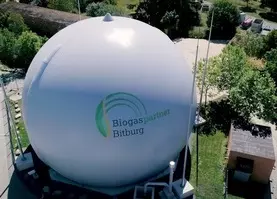
Almacenamiento de gas en el aeropuerto de Bitburg. El biogás recogido aquí se procesará posteriormente y se introducirá en la red de gas natural. - © Stadtwerke Trier

El biogás procedente de la agricultura se procesa y se introduce en la red de gas natural. Stadtwerke Trier (SWT) quiere ampliar el proyecto.

En vista de la actual situación de escasez de gas y la explosión de precios de la energía, hay un proyecto en el Eifel que atrae una atención especial, pues muestra, a pequeña escala, cómo se puede contrarrestar la dependencia de los combustibles fósiles y de los importadores. Se trata de Biogas Partners Bitburg (BPB), que desde 2020 produce su propio biogás natural, contribuyendo así a la sostenibilidad de la región en muchos aspectos. El socio central del proyecto es SWT.

Los resultados del primer año de funcionamiento son tan prometedores que los operadores ya están planificando una segunda ubicación en Eifel y estudian si el concepto puede trasladarse también a Hunsrück. Esto porque el proyecto muestra que las plantas de biogás existentes pueden seguir operando al término de la compensación EEG (EEG-Vergutung: https://en.wikipedia.org/wiki/Feed-in_tariff) y contribuir a aumentar la cuota de biogás regional.

Desde 2020, los socios de BPB recogen el biogás bruto de siete plantas regionales para refinarlo. Para transportar la energía, SWT ha construido una red de biogás de unos 45 kilómetros de longitud en el marco del proyecto Verbundnetz Westeifel, proyecto por el que los operadores han sido premiados en dos ocasiones, la última en la primavera de 2022 con el premio de plata a la sostenibilidad del periódico de economía municipal.

Uso flexible
Al introducirlo en la red de gas natural existente, el biogás natural producido en la región puede utilizarse eficazmente en diferentes lugares: en centrales de cogeneración con aprovechamiento permanente del calor o como producto (de adición) para el abastecimiento energético de la población de la región. El producto se llama Landgas Eifel y lo vende Landwerke Eifel Vertriebs-GmbH.

El control inteligente de todo el sistema a través de la inteligencia artificial permite utilizar las centrales de cogeneración instaladas en las explotaciones como opción de flexibilidad cuando sea necesario. De este modo, la infraestructura existente contribuye a equilibrar la generación fluctuante de energía eólica y solar.

"Utilizar los recursos existentes"
“BPB hace una importante contribución al equilibrio energético regional en nuestra región. Muestra cómo podemos utilizar los recursos e infraestructuras existentes en favor de la protección del medio ambiente y la seguridad del suministro. Por eso estamos orgullosos de formar parte de esta asociación regional", afirma Arndt Müller, miembro del consejo de administración de SWT, que posee acciones de BPB junto con Entsorgungsbetrieb Luzia Francois GmbH y Kommunale Netze Eifel AöR. Los socios colaboraron en la instalación de la infraestructura de biogás necesaria en el marco del proyecto conjunto de la región de Westeifel.

Cuando se puso en marcha la planta hace casi dos años, la entonces ministra de Medio Ambiente, Ulrike Höfken, la elogió por demostrar "el potencial del biogás almacenable para el acoplamiento del sector". En esta forma, es un proyecto excepcional que podría y debería ser imitado en todo el país".

Metano y dióxido de carbono
SWT explica en detalle el proceso de producción en su página web. Simplificado y abreviado: los agricultores producen biogás en bruto a partir de residuos agrícolas (estiércol líquido, estiércol sólido, residuos de piensos) y materias primas renovables. Este producto bruto está compuesto por un 53% de metano (CH4) y un 46% de dióxido de carbono (CO2); se purifica y se enfría, y luego se transporta a través de una red de biogás bruto de unos 45 kilómetros de longitud hasta la planta central de procesamiento de Bitburg.

En Bitburg, el biogás bruto entrante se recoge en un tanque de almacenamiento con una capacidad de hasta 5.300 metros cúbicos y se envía a la planta de mejora, donde se elimina el CO2. El biogás se compone ahora de un 98% de metano. El CO2 separado ofrece condiciones óptimas para la construcción de una planta de conversión de energía en gas. De este modo, el hidrógeno verde generado a partir de los excedentes regionales de electricidad puede convertirse en biogás natural y almacenarse en la infraestructura existente.

Evitar los monocultivos
El gas natural varia, según la zona de la red, en sus características como combustible. Por lo tanto, SWT, como operador de la red de gas natural, asume la tarea de convertir el biogás bruto mejorado a las propiedades de combustible de la red de gas natural de Bitburg y adaptarlo a la presión de red requerida. Los socios de biogás de Bitburg han acordado limitar el uso de maíz para la producción de biogás bruto con el fin de contrarrestar el cultivo de monocultivos. Actualmente, SWT está investigando hasta qué punto los residuos regionales de la industria y el comercio pueden utilizarse para la producción de biogás y, por tanto, como sustituto del maíz. Mientras tanto, la red de gas natural se está diseñando como una red de almacenamiento por varias estacional (nw).

https://www.erneuerbareenergien.de/tech ... inspeisung
Fermat
Mensajes: 2139
Registrado: Mié Mar 02, 2022 5:42 am

Re: Notas de energías renovables

Mensaje sin leer por Fermat »

Floating artificial leaves produce fuels from water, air and sunlight
Michael Irving, August 17, 2022

Imagen
A sample artificial leaf floating on the river Cam near the University of Cambridge

The leaf is one of nature’s most impressive little machines, able to convert sunlight, carbon dioxide and water into energy. Scientists at Cambridge have now created a type of artificial leaf that can float on water, tapping into sunlight above it and water below it to produce fuels as efficiently as the real thing.

The new study builds on the team’s previous design for an artificial leaf that used two perovskite light absorbers paired with a cobalt catalyst, and would take water and carbon dioxide in to make oxygen, hydrogen and carbon monoxide. The latter products two could then be captured and used to make synthetic gas (syngas), a key ingredient in plastics, fertilizers and fuels like diesel, essentially helping reduce the CO2 footprint of those products.

But the earlier design was rather bulky, with thick glass and other materials that made it a freestanding device. For the new study, the researchers wanted to slim it down, to the point that it was light enough to float on water, without losing its efficiency.

To do so, the team deposited perovskite light-absorbing layers onto thin, flexible layers of polyester coated in indium tin oxide, and used a platinum catalyst. These were then covered with ultra-thin carbon-based materials that repelled water, to protect the devices against moisture damage.

Imagen
The floating artificial leaf can convert sunlight, water and CO2 into fuels as efficiently as natural leaves Virgil Andrei

The end result was an artificial leaf that could float on the water’s surface, either splitting that water into hydrogen and oxygen or producing the ingredients for syngas. Testing the devices on nearby waterways, the team showed that per gram, the output was comparable to natural leaves – 0.58% for hydrogen and 0.053% for carbon monoxide. Those numbers might not sound like much, but they’re huge improvements over the previous iteration.

The floating artificial leaves are scalable too, with tests being conducted on versions from 1.7 cm2 (0.3 in2) up to 100 cm2 (15.5 in2), with performances that scaled with it. The team says the devices could be used to generate cleaner fuels essentially anywhere there’s water, including polluted waterways or in the open sea.

The research was published in the journal Nature.

Source: University of Cambridge

https://newatlas.com/energy/floating-ar ... lar-fuels/
Fermat
Mensajes: 2139
Registrado: Mié Mar 02, 2022 5:42 am

Re: Notas de energías renovables

Mensaje sin leer por Fermat »

Battery made of aluminum, sulfur and salt proves fast, safe and low-cost
Michael Irving, August 24, 2022

Imagen
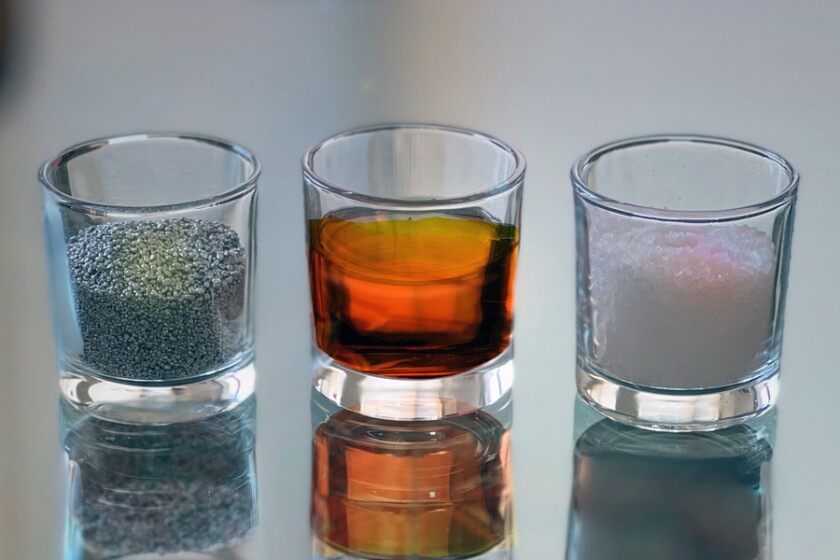
The three main ingredients in the new battery, from left: aluminum, sulfur and salt

Engineers at MIT have developed a new battery design using common materials – aluminum, sulfur and salt. Not only is the battery low-cost, but it’s resistant to fire and failures, and can be charged very fast, which could make it useful for powering a home or charging electric vehicles.

Lithium-ion batteries have dominated the field for the last few decades, thanks to their reliability and high energy density. However, lithium is becoming scarcer and more expensive, and the cells can be hazardous, exploding or bursting into flames if damaged or improperly used. Cheaper, safer alternatives are needed, especially as the world transitions towards renewable energy and electric vehicles.

So the MIT team set out to design a new type of battery out of readily available, inexpensive materials. After a search and some trial and error, they settled on aluminum for one electrode and sulfur for the other, topped off with an electrolyte of molten chloro-aluminate salt. Not only are all of these ingredients cheap and common, but they’re not flammable, so there’s no risk of fire or explosion.

In tests, the team demonstrated that the new battery cells can withstand hundreds of charge cycles, and charge very quickly – in some experiments, less than a minute. The cells would cost just one sixth of the price of a similar-sized lithium-ion cell.

They can not only operate at high temperatures of up to 200 °C (392 °F) but they actually work better when hotter – at 110 °C (230 °F), the batteries charged 25 times faster than they did at 25 °C (77 °F). Importantly, the researchers say the battery doesn’t need any external energy to reach this elevated temperature – its usual cycle of charging and discharging is enough to keep it that warm.

Although the type of salt in the electrolyte was chosen because it has a low melting point, it coincidentally has another benefit – it naturally prevents the formation of dendrites. These metal tendrils, which gradually grow between the two electrodes until they cause a short circuit, are a major hurdle for batteries, particularly lithium-ion cells.

The team says that this battery design would be best suited to the scale of a few dozen kilowatt-hours, like powering an individual home from renewable sources. They could also be useful as charging stations for electric vehicles, thanks to their rapid charging. Other types of batteries, such as a recent design using molten salt electrolyte and aluminum and nickel electrodes, could work better at grid scale.

The patents for the aluminum-sulfur batteries have been licensed to a spinoff company called Avanti, co-founded by one of the authors of the study describing the design. The first order of business is to build it at scale, and run it through stress tests.

The research was published in the journal Nature.

Source: MIT

https://newatlas.com/energy/aluminum-su ... -low-cost/
Fermat
Mensajes: 2139
Registrado: Mié Mar 02, 2022 5:42 am

Re: Notas de energías renovables

Mensaje sin leer por Fermat »

Contra-rotating floating turbines promise unprecedented scale and power
Loz Blain, August 30, 2022

Imagen
Contra-rotating vertical turbines could radically improve yield and reduce LCoE for floating offshore wind projects, according to World Wide Wind

Norway's World Wide Wind has a radically different take on offshore wind power. These floating, vertical-axis wind turbines (VAWTs) feature two sets of blades, tuned to contra-rotate – and they promise more than double the output of today's biggest turbines.

Taking wind farms way offshore can certainly help make them less obtrusive, and open up a lot more opportunities – but as the ocean gets deeper, conventional horizontal-axis wind turbines (HAWTs) begin making less and less sense. HAWTs need to hold a lot of heavy components – drivetrains, gearboxes, generators and their colossal blades – right up the top of a long pole, so mounting them on floating platforms that don't want to tip over is a huge challenge – not to mention maintaining the business end of a turbine so far above the ground.

Some engineers and operators believe this could be a niche where VAWTs could shine instead. Their blades reach upward, but all their other heavy bits are at the bottom, so their natural tendency is to sit upright. Also, they can accept wind energy from any direction, rather than needing to turn to face into the wind, cutting down on some more heavy gear you'd find up high on a HAWT. They're typically far less efficient than a regular three-blade HAWT, sucking less energy out of a given breeze, but on the other hand, you can place them closer together without a drop in performance, meaning they could potentially suck more energy out of a given patch of ocean.


Imagen
The top turbine, mounted to a central blade, spins in one direction, while the bottom, and the tower's exterior, spins in the other, with the generator at the bottom

And so to the device at hand. World Wide Wind has proposed an entirely new type of floating VAWT specifically designed for offshore deployment and massive scalability. Indeed, it's two VAWTs in one; the lower one is fixed to the outer casing of the tower, and set to rotate one way, and the upper one is mounted to a shaft running right up the middle of the tower, and it's set to rotate the other way.

Under the surface, one turbine is fixed to the rotor, the other to the "stator," doubling the relative speed of rotation as compared to a static stator, and generating a whole bunch of electricity we can burn our toast with. The company calls this a contra-rotating vertical turbine, or CRVT.

Seguir leyendo:
https://newatlas.com/energy/coaxial-ver ... -turbines/
Fermat
Mensajes: 2139
Registrado: Mié Mar 02, 2022 5:42 am

Re: Notas de energías renovables

Mensaje sin leer por Fermat »

Producción de hidrógeno verde más barata mediante la nanotecnología
Sabine Sluijters, 12 agosto 2022

Imagen
Groene waterstof kan ingezet worden als alternatief voor fossiele brandstoffen in de industrie en het transport en voor opslag van duurzame energie

Los costes de producción del hidrógeno verde pueden reducirse considerablemente gracias a la nanotecnología. Una empresa emergente de Singapur aporta la prueba.

Nanotecnología del hidrógeno
El hidrógeno verde puede utilizarse como alternativa a los combustibles fósiles en la industria y el transporte y para el almacenamiento de energía sostenible.

El hidrógeno verde es una parte importante de la transición energética. Puede contribuir a una industria química más sostenible y servir de alternativa a los combustibles contaminantes en, por ejemplo, la navegación o el transporte pesado. También puede utilizarse para absorber los picos de producción de energía eólica y solar.

Reducción de los costes de producción de hidrógeno
Pero la producción de hidrógeno verde sigue siendo más cara que la variante gris hecha con gas natural. Una empresa emergente de Singapur afirma ahora encontrado una innovación que puede reducir significativamente los costes de producción del hidrógeno.

La empresa se dedica a la nanotecnología de separación del electrolizador, el dispositivo que produce el hidrógeno, a nivel nanométrico. La electrólisis consume mucha energía y algunas variantes utilizan metales raros y preciosos, como el platino y el iridio.

Duplicar la producción de hidrógeno
SungreenH2 se centra en los electrodos que dividen el agua. Al cambiar la nanoestructura del electrodo, aumenta la superficie activa. Según la empresa, esto permite duplicar la producción de hidrógeno y se necesita un 30% menos de metales raros para la electrólisis.

Es una buena noticia, porque supone una reducción considerable de los costes. "Cambiando la nanoestructura duplican la superficie", dice el profesor de Sistemas Energéticos del Futuro Ad van Wijk, de la Universidad Técnica de Delft. "Eso significa que necesitan menos materiales y eso reduce los costes. No obstante, duda que puedan producir el doble de hidrógeno. "El doble de superficie no significa automáticamente el doble de producción de hidrógeno, solo que necesitas menos material".

Metales raros
La innovación de SungreenH2 es aplicable en todo tipo de electrolizadores. De los distintos tipos de electrolizadores, los electrolizadores alcalinos y los de membrana electrolítica de polímero (PEM) son ya muy utilizados. La innovación de SungreenH2 será especialmente beneficiosa en los tipos que utilizan muchos metales raros, como el PEM.

"El hecho de que el platino y el iridio se utilicen como catalizadores en ese electrodo acelera el proceso. Un electrolizador alcalino como el que Shell está instalando actualmente en el puerto de Rotterdam no contiene estos metales", dice Van Wijk. "El electrolizador PEM sí contiene estos metales. Se trata de una tecnología algo más reciente y más cara que la alcalina. Pero la ventaja es que puede arrancar y parar más rápido, lo que es especialmente útil en la producción de hidrógeno directamente vinculada a la energía eólica o solar, debido a la fluctuación del suministro de electricidad".

Nanotecnología
Según Van Wijk, la nanotecnología puede contribuir enormemente a reducir los costes de las energías renovables. "No sólo con electrolizadores, sino también con baterías y células solares". Esto puede hacerse de varias maneras. TUDelft cuenta con un equipo de investigación que coloca los metales molécula a molécula en los electrodos. "Eso también puede ahorrar un factor de cien en material. Todos estos métodos son muy útiles para reducir los costes de las tecnologías sostenibles.

https://www.change.inc/ict/productie-gr ... e=hs_email
Última edición por Fermat el Sab Sep 03, 2022 5:27 am, editado 1 vez en total.
Fermat
Mensajes: 2139
Registrado: Mié Mar 02, 2022 5:42 am

Re: Notas de energías renovables

Mensaje sin leer por Fermat »

Aluminum-gallium powder bubbles hydrogen out of dirty water
Loz Blain, September 01, 2022

Imagen
A new powder identified by UCSC researchers can be dumped into seawater to rapidly release 90% of its theoretical maximum of hydrogen

“We don’t need any energy input, and it bubbles hydrogen like crazy. I’ve never seen anything like it,” said UCSC Professor Scott Oliver, describing a new aluminum-gallium nanoparticle powder that generates H2 when placed in water – even seawater.

Aluminum by itself rapidly oxidizes in water, stripping the O out of H2O and releasing hydrogen as a byproduct. This is a short-lived reaction though, because in most cases the metal quickly attains a microscopically thin coating of aluminum oxide that seals it off and puts an end to the fun.

But chemistry researchers at UC Santa Cruz say they've found a cost-effective way to keep the ball rolling. Gallium has long been known to remove the aluminum oxide coating and keep the aluminum in contact with water to continue the reaction, but previous research had found that aluminum-heavy combinations had a limited effect.

So when chemistry/biochemistry Professor Bakthan Singaram found out that student Isai Lopez was playing with aluminum/gallium hydrogen production in his kitchen at home, there didn't seem to be anything particularly special about the idea.

“He wasn’t doing it in a scientific way, so I set him up with a graduate student to do a systematic study," Singaram said. "I thought it would make a good senior thesis for him to measure the hydrogen output from different ratios of gallium and aluminum.”

When Lopez decided to extend the experiment to test gallium-heavy mixtures, things got a little weird. Hydrogen production went through the roof, and the team started trying to figure out why these mixtures were behaving so fundamentally differently.

After electron microscopy and X-ray diffraction studies, they realized that the most effective mix, three parts gallium to one part aluminum, was indeed doing something the lower ratios weren't. Not only was the gallium dissolving the aluminum oxide, it was also causing the aluminum to separate into nanoparticles, and keeping them separate.

“The gallium separates the nanoparticles and keeps them from aggregating into larger particles,” Singaram said. “People have struggled to make aluminum nanoparticles, and here we are producing them under normal atmospheric pressure and room temperature conditions.”

With the aluminum so finely separated, its surface area is maximized and the reaction with water was spectacularly efficient, pulling out 90% of the theoretical maximum amount of hydrogen possible for a given amount of aluminum. In a study published in ACS Nano Materials, the researchers report that a single gram of their gallium-aluminum alloy will rapidly liberate 130 ml of hydrogen when placed in water.

Seguir leyendo:
https://newatlas.com/energy/aluminum-ga ... en-powder/
Fermat
Mensajes: 2139
Registrado: Mié Mar 02, 2022 5:42 am

Re: Notas de energías renovables

Mensaje sin leer por Fermat »

A sustainable battery with a biodegradable electrolyte made from crab shells
Cell Press, September 1, 2022

Accelerating demand for renewable energy and electric vehicles is sparking a high demand for the batteries that store generated energy and power engines. But the batteries behind these sustainability solutions aren't always sustainable themselves. In a paper publishing September 1 in the journal Matter, scientists create a zinc battery with a biodegradable electrolyte from an unexpected source -- crab shells.

"Vast quantities of batteries are being produced and consumed, raising the possibility of environmental problems," says lead author Liangbing Hu, director of the University of Maryland's Center for Materials Innovation. "For example, polypropylene and polycarbonate separators, which are widely used in Lithium-ion batteries, take hundreds or thousands of years to degrade and add to environmental burden."

Batteries use an electrolyte to shuttle ions back and forth between positively and negatively charged terminals. An electrolyte can be a liquid, paste, or gel, and many batteries use flammable or corrosive chemicals for this function. This new battery, which could store power from large-scale wind and solar sources, uses a gel electrolyte made from a biological material called chitosan.

"Chitosan is a derivative product of chitin. Chitin has a lot of sources, including the cell walls of fungi, the exoskeletons of crustaceans, and squid pens," says Hu. "The most abundant source of chitosan is the exoskeletons of crustaceans, including crabs, shrimps and lobsters, which can be easily obtained from seafood waste. You can find it on your table."

A biodegradable electrolyte means that about two thirds of the battery could be broken down by microbes -- this chitosan electrolyte broke down completely within five months. This leaves behind the metal component, in this case zinc, rather than lead or lithium, which could be recycled.

"Zinc is more abundant in earth's crust than lithium," says Hu. "Generally speaking, well-developed zinc batteries are cheaper and safer." This zinc and chitosan battery has an energy efficiency of 99.7% after 1000 battery cycles, making it a viable option for storing energy generated by wind and solar for transfer to power grids.

Hu and his team hope to continue working on making batteries even more environmentally friendly, including the manufacturing process. "In the future, I hope all components in batteries are biodegradable," says Hu. "Not only the material itself but also the fabrication process of biomaterials."

Story Source: Materials provided by Cell Press.

Journal Reference:
Meiling Wu, Ye Zhang, Lin Xu, Chunpeng Yang, Min Hong, Mingjin Cui, Bryson C. Clifford, Shuaiming He, Shuangshuang Jing, Yan Yao, Liangbing Hu. A sustainable chitosan-zinc electrolyte for high-rate zinc-metal batteries. Matter, 2022; DOI: 10.1016/j.matt.2022.07.015

https://www.sciencedaily.com/releases/2 ... 135827.htm
Fermat
Mensajes: 2139
Registrado: Mié Mar 02, 2022 5:42 am

Re: Notas de energías renovables

Mensaje sin leer por Fermat »

La misma información en español:

Baterías sostenibles hechas de cangrejo y langosta podrían ser el futuro de las energías renovables
Esta pila de zinc y quitosano tiene una eficiencia energética del 99,7 % tras 1.000 ciclos de batería.

Imagen
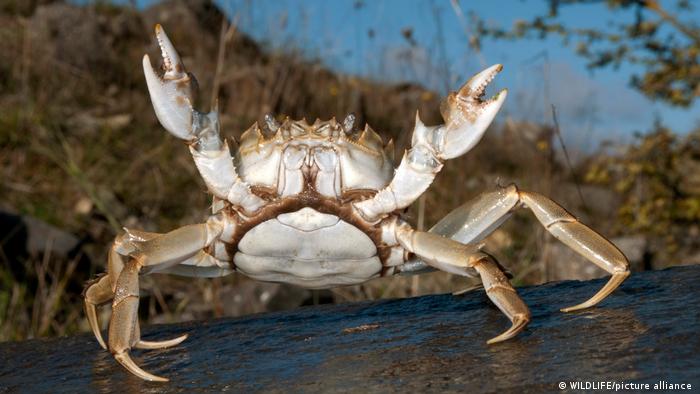
Los caparazones de los cangrejos son una fuente abundante de quitosano.

El avance de las energías renovables y los vehículos eléctricos está aumentando la demanda de baterías, que no siempre son sostenibles, pero un grupo de científicos estadounidenses ha encontrado una solución en los caparazones de los cangrejos.

Se trata de una batería sostenible realizada con zinc y un electrolito biodegradable sacado de las cáscaras de ese crustáceo, según publica Matter.

Las baterías utilizan un electrolito para transportar iones entre los polos cargados positiva y negativamente, el cual puede ser un líquido pasta o gel, para lo que muchas pilas usan productos químicos inflamables o corrosivos.

Además, los separadores de polipropileno y policarbonato, muy utilizados en las baterías de iones de litio, tardan cientos o miles de años en degradarse y aumentan la carga medioambiental, según Liangbing Hu de la Universidad de Maryland y firmante del estudio.

Material biológico quitosano
La nueva pila que, según el equipo, podría almacenar energía procedente de fuentes eólicas y solares a gran escala, utiliza un electrolito de gel hecho de un material biológico llamado quitosano.

Hu explicó que se trata de un producto derivado de la quitina, la cual procede de muchas fuentes como las paredes celulares de los hongos, los exoesqueletos de los crustáceos y las plumas del interior de los calamares.

La fuente más abundante de quitosano son los exoesqueletos de los crustáceos, incluidos los cangrejos, las gambas y las langostas, que pueden obtenerse fácilmente de los desechos del marisco.

Dos tercios de la pila podrían ser descompuestos por microbios
Un electrolito biodegradable significa que unos dos tercios de la pila podrían ser descompuestos por los microbios. El que usa esta batería se descompone por completo en cinco meses, lo que deja solo el componente metálico, en este caso el zinc, en lugar del plomo o el litio, que podría reciclarse.

El zinc es más abundante en la corteza terrestre que el litio y, "en general", las baterías "bien desarrolladas" que usan este componente "son más baratas y seguras", dijo el investigador.

"En el futuro, espero que todos los componentes de las baterías sean biodegradables", dijeron. "No solo el material en sí, sino también el proceso de fabricación de los biomateriales".

Esta pila de zinc y quitosano tiene una eficiencia energética del 99,7 % tras 1.000 ciclos de batería, "lo que la convierte en una opción viable para almacenar la energía generada por el viento y la energía solar para transferirla a las redes eléctricas".

FEW (EFE, Matter, Cell Press)
https://p.dw.com/p/4GXkT
Fermat
Mensajes: 2139
Registrado: Mié Mar 02, 2022 5:42 am

Re: Notas de energías renovables

Mensaje sin leer por Fermat »

T-Omega re-thinks floating offshore wind turbines for huge cost savings
Loz Blain, September 08, 2022

Imagen
Floating offshore wind turbines don't need to scale up to gargantuan proportions to provide cheap energy, says T-Omega – they just need a ground-up redesign that's not driven by on-shore thinkingT-Omega Wind

All the world's greatest wind power resources are offshore – often a long way offshore, where the water's so deep that it's impractical to build typical fan-on-a-stick wind turbines with bases sunk deep into the sea floor. Floating wind, at this stage, is so vastly expensive to build, deploy and maintain that it ends up costing two to three times as much per kilowatt-hour of energy as fixed-bottom offshore installations.

There's a huge opportunity here for technological advancement, and companies like Norway's World Wide Wind are proposing some pretty radical ideas in the space. A lot of the energy cost comes down to the size, weight and materials involved in the structure of the turbine, along with the logistical issues and specialized equipment needed to build, install and maintain the things.

Boston startup T-Omega Wind says it's prototyped and tested a unique floating offshore wind turbine design that can withstand massive storms and hundred-foot waves, but at 20% the weight and around 30% the price of conventional designs – not to mention super-simple deployment and installation – unlocking an affordable way to exploit the world's best wind resources.

Imagen
Because there's so little under the waterline, T-Omega's turbines can easily be towed around by a single, cheap tug, meaning that maintenance can be done at a port, rather than out at sea using incredibly expensive and specialised shipsT-Omega Wind

"All offshore floating turbines except ours are like icebergs," says T-Omega Co-Founder and Chief Engineer Jim Papadopoulos over a video chat. "Whatever they've got above the water, they've got four times as much below the water. If they've got 1,500 tons above the water, they've got 6,000 tons under the water. That's a big expense. We put almost nothing under the water. That's one of the big differences in cost, and movability, and launching."

Conventional floating turbines, says Papadopoulos, use technology that was only ever designed for land. "Right now, a Vestas or GE-style turbine, they have a whacking great rotor, with a shaft on one side. You can engineer almost anything, but with a single-sided shaft, that shaft is massive, and requires some pretty special bearings. And because of the forces that go through that design, there's very little margin for it to change angle. So they have to hold them dead still, perfectly upright – hence, the heavy, expensive base. They're imbued with a land-style philosophy, and it's incredibly expensive."

T-Omega's approach is completely different, starting at the turbine and generator itself, which mount to a double-sided axle shaft that's rigidly supported at both ends. Thus, rather than a single, heavyweight pole, the turbine is supported by four much slimmer legs, reaching down to lightweight, wide-spaced floating base platforms. It's much like the way a Ferris wheel is suspended; there's a reason why they don't build those on a single pole.


Will it capsize?
"If you took a wooden door and put it in the water, it's not going to tip over," says Papadopoulos. "It's the width compared to the height. So yeah, we have a very wide base compared to any other floating design. To lift the floats out of the water, you're looking at an ungodly amount of torque – it's much more than the generator torque."

Seguir leyendo:
https://newatlas.com/energy/t-omega-floating-wind/
Fermat
Mensajes: 2139
Registrado: Mié Mar 02, 2022 5:42 am

Re: Notas de energías renovables

Mensaje sin leer por Fermat »

Un invento coreano pone al alcance el hidrógeno verde barato
Sabine Sluijters, 05 septiembre 2022

Científicos coreanos han encontrado una alternativa a los costosos metales terrestres necesarios para fabricar hidrógeno verde. Esto acerca un poco más la producción masiva de hidrógeno verde.

Imagen
En lugar del costoso platino, los científicos utilizan un trozo de tela para producir hidrógeno

Producir hidrógeno verde mediante electrólisis sigue siendo caro. Esto es en parte porque para el proceso se necesita metales raros como el platino, que es un metal precioso escaso y más caro que el oro. Científicos coreanos afirman ahora haber encontrado una alternativa para este metal, lo que podría reducir el coste de la fabricación de hidrógeno verde en un 20%.

Alternativa al platino
Los científicos sustituyen el platino por una pieza textil que primero "carbonizan" a temperaturas de 900 grados. Esto en sí es un logro, pues la carbonización normalmente se produce a temperaturas de 2.000 grados. La carbonización convierte el tejido en un nuevo tipo de material que conduce muy bien la electricidad. A continuación, sumergen el textil carbonizado en una solución de níquel. Al someterlo a corriente, la solución de níquel se une al tejido, creando un material nuevo.

Producción masiva de hidrógeno verde
El descubrimiento, publicado a finales de agosto en la revista científica Energy & Environmental Science de la Royal Society of Chemistry, es importante porque demuestra que el hidrógeno verde también puede producirse sin utilizar metales raros como el platino. Además, se necesitaba menos voltaje para producir hidrógeno. El invento acerca un poco más la producción masiva y barata de hidrógeno verde.


https://www.change.inc/energie/koreaans ... e=hs_email
Fermat
Mensajes: 2139
Registrado: Mié Mar 02, 2022 5:42 am

Re: Notas de energías renovables

Mensaje sin leer por Fermat »

New solar device can pull hydrogen straight from the air
B. David Zarley, September 14, 2022

Using solar power and special materials, researchers have made 99% pure hydrogen.

Hydrogen fuel is an attractive candidate for a clean energy source, since it burns very clean. But on Earth, hydrogen is almost always bound up with other elements, and separating it requires a ton of energy. Almost all hydrogen today is created with natural gas. The main alternative to this process uses electricity, which is often generated via fossil fuels, thereby defeating the purpose, and clean water, also a precious resource. But researchers with the University of Melbourne and University of Manchester have developed a way to harness solar power and the very air around us to produce truly green hydrogen.

By pulling water from the air and applying electricity provided by solar panels, they can rend the H2O molecules, producing pure hydrogen (H2). The technology may one day allow for hydrogen production even in places severely lacking in water — like the Australian desert.

“We see an area that has no groundwater and think it’s unsuitable for hydrogen production. But there is always abundant fresh water in air,” study lead Gang Kevin Li, a senior chemical engineering lecturer at Melbourne, said in a statement.

“Even Alice Springs, which is in part of [the] desert, has around 20 per cent relative humidity. This is more than enough for us to produce hydrogen onsite using renewable energy.”

Hydrogen’s potential: There is great power in hydrogen fuel — enough to lift NASA’s rockets into space, the agency having turned to liquid hydrogen all the way back in the 1950s. Handing gravity an L is only a small fraction of our hydrogen use, however; according to the federal Energy Information Administration, the majority of hydrogen consumed goes to refining petroleum (ironically), producing fertilizer, processing foods, and treating metals.

Hydrogen fuel cells combine hydrogen and oxygen, a reaction that creates electricity, heat, and water. So, where’s our hydrogen-powered everything?

“There’s virtually no pure hydrogen on Earth because it’s so reactive,” Paul Ronney, a professor of aerospace and mechanical engineering at USC unaffiliated with the research, said. According to Ronney, most of the hydrogen we have is made from methane, in a CO2 and greenhouse gas emitting process; turning water into hydrogen, via a process called electrolysis, requires electricity.

“To get that, we’re back to burning fossil fuels,” Ronney said.

Seguir leyendo:
https://www.freethink.com/environment/hydrogen-from-air

NB! Editados espacios por legibilidad.
Responder